

Walking the Camino Portugues from Lisbon offers a calm and authentic start. My experience on the route to Porto, with practical tips for your journey.
What is the Camino Portugués and why do you want to start in Lisbon?
The Camino Portugués is one of the most popular routes to Santiago de Compostela after the Camino Francés. Officially, this trek starts in Lisbon, although many pilgrims choose to start from Porto. You can see this reflected in the numbers. In 2025, more than 26,000 pilgrims left from Porto and about 2,800 from Lisbon. That difference has everything to do with how familiar both starting points are. It does not mean that the stretch between Lisbon and Porto is less beautiful or less worthwhile.
Because so few people start here, I wanted to experience this part of the Camino myself. When I told people I planned to walk the entire Camino Portugues from Lisbon and not just the section from Porto, they were often surprised. Many had heard that this part of the route is mainly industrial and full of asphalt. Yet hardly anyone I spoke to had actually walked it. My hiking guide by John Brierley even notes that the proportion of unpaved paths between Lisbon and Porto is similar to the section between Porto and Santiago, around 33 percent. The rest follows roads and sidewalks, which makes sense for a traditional pilgrimage connecting towns and cities.
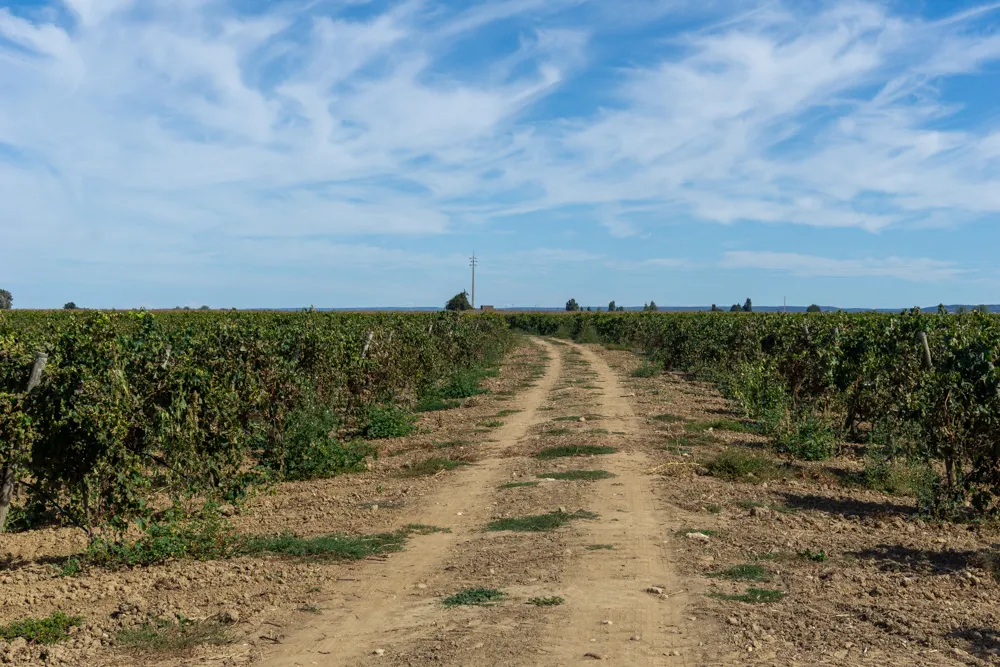
The full Camino Portugues from Lisbon to Santiago is about 650 kilometers. In this article, I focus on the stretch between Lisbon and Porto, which is about 392 kilometers based on my own Strava measurement. It is quieter, you meet fewer pilgrims and it sometimes requires a bit more planning. That is exactly what makes this part so special. You have more contact with locals, you walk through areas rarely visited by tourists and you have plenty of space to move at your own pace.

I chose to start in Lisbon because I like walking a full Camino. Beginning in the capital and gradually heading inland felt right. Some days were quiet, but that suited the route and gave me space to reflect. The few encounters I had were all the more memorable because of that. For me, the stretch between Lisbon and Porto gave my Camino a strong and complete beginning. I would absolutely recommend not skipping this part. It gives your journey a natural build-up and a character all its own.
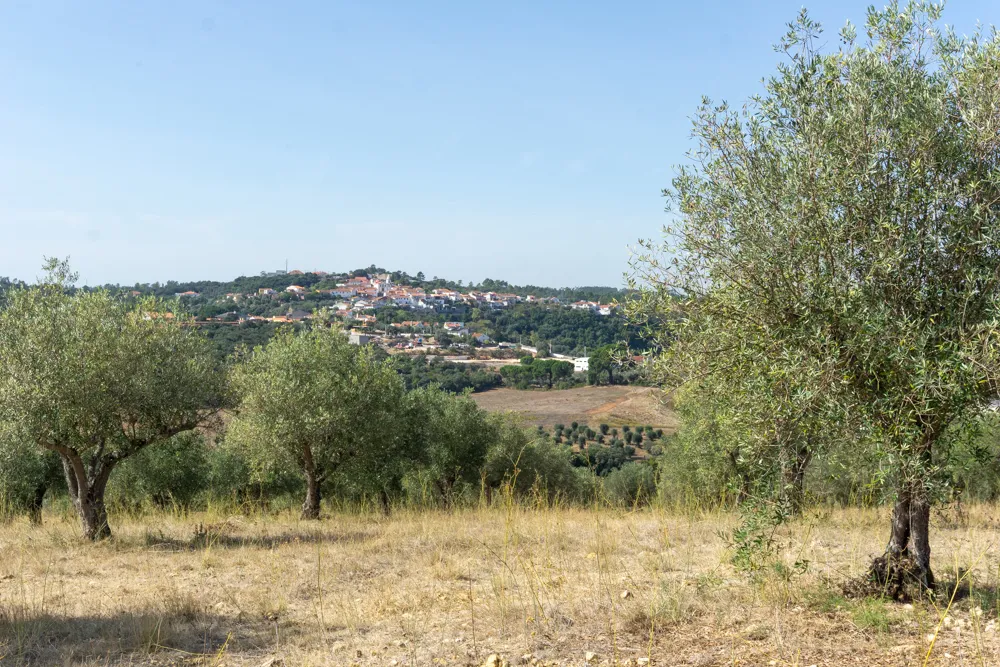
The official Camino Portugués starts at Lisbon Cathedral and follows an inland route. You first walk along the Tagus River, then continue further inland towards places like Santarém, Tomar and Coimbra before eventually reaching Porto. Along the way you walk quite a bit on asphalt, mixed with quiet country roads, forest paths and small villages. I especially loved the section between Tomar and Coimbra, where you walk on narrow trails between olive trees and vineyards.

Camino Portugués stages between Lisbon and Porto
One of the great things about a Camino is that you can shape your stages however you like. You are not tied to a fixed schedule. There are enough places to stay overnight and you will pass train stations and bus stops regularly, which adds flexibility. In the first few days I used the train several times because the distance between two hostels was simply too long. The next morning I would return to the exact spot where I stopped, so I still walked every step to Santiago.
A rough breakdown is still useful, so you know what to expect in terms of distance and structure. Below is a stage overview from Lisbon to Porto as used by Gronze. Treat it as a guideline only, because every guidebook and app offers slightly different distances. Your own pace and how you feel along the way will determine how you divide your days.
- Lisbon – Vila Franca de Xira (34.2 km – average)
- Vila Franca de Xira – Azambuja (20 km – easy)
- Azambuja – Santarém (33 km – average)
- Santarém – Golegã (30.7 km – average)
- Golegã – Tomar (31.3 km – average)
- Tomar – Alvaiázere (31.7 km – average)
- Alvaiázere – Alvorge (22.7 km – average)
- Alvorge – Cernache (26.1 km – average)

- Cernache – Coimbra (11.3 km – easy)
- Coimbra – Sernadelo (24.8 km – average)
- Sernadelo – Águeda (23.5 km – average)
- Águeda – Albergaria-a-Velha (15.8 km – easy)
- Albergaria-a-Velha – São João da Madeira (28.8 km – average)
- São João da Madeira – Grijó (19 km – easy)
- Grijó – Porto (15.1 km – easy)
This adds up to fifteen stages, but it is not a required schedule. It took me seventeen days to walk from Lisbon to Porto. In the beginning I chose shorter stages and later on some longer ones. The breakdown above is based on towns where you can usually find reliable accommodation, which can be harder to find between Lisbon and Tomar.
In the end I walked my own stages, sometimes shorter and sometimes longer, depending on how my feet felt and what accommodation I had in mind. That is the beauty of this Camino. You can walk it exactly the way you want.
Curious about where to stay and how I did the stages? Read: Camino Portugués stages: routes, planning and where to stay
How to navigate on the Camino Portugués
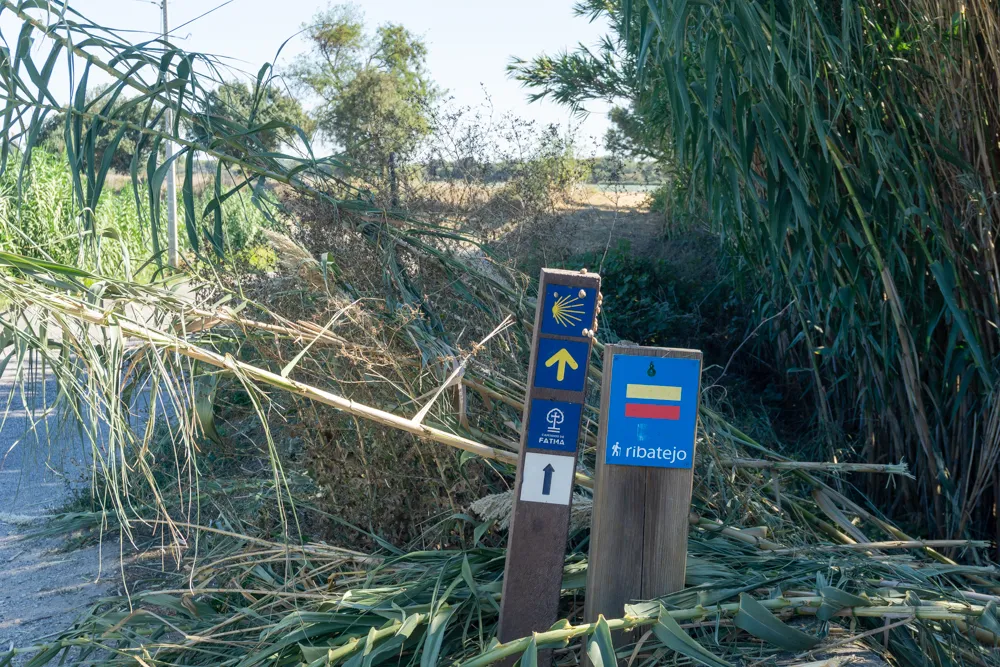
As on other Camino routes, on the Camino Portugués you simply follow the yellow arrows. They appear on signs, trees, sidewalks and walls, and once you have seen a few you immediately know what to look for. In Lisbon and the first fifty kilometers the markings can be a bit unclear. From Azambuja onwards they become much easier to follow.
You will also see blue arrows along the way. These are intended for pilgrims walking towards Fátima, not Santiago, so it helps to pay attention to them especially in the beginning.
I carried the hiking guide A Pilgrim’s Guide to the Camino Portugues by John Brierley. I used it mainly for maps, village information and to get an idea of the elevation changes, which are not very dramatic on this stretch. It also includes occasional alternative routes that take you off a busy road, which I appreciated.
I also used two apps: Wise Pilgrim and Buen Camino. Both show where you are on the map, help you check distances between places and make it easy to plan your own stages and find accommodation along the way.
As long as you follow the yellow arrows and check an app or map from time to time, you will walk from Lisbon to Porto without any difficulty.
Best time to walk the Camino Portugués
You can walk the Camino Portugués between Lisbon and Porto at any time of year. This part of the route is never very crowded, simply because it is less well known. That gives you more freedom to choose the season that feels right for you. Still, there are clear differences depending on when you go.
In summer it can get quite hot, especially in the south where you walk long stretches through open countryside. Temperatures above thirty degrees are common. If you struggle with heat, this is not the most comfortable time to walk.
Winters are milder in the south, but further north it becomes wetter. The days are shorter and some paths can get muddy. The upside is that even in winter, a surprising number of hostels remain open. Many accommodations open in March and stay open until November.
I walked in October and really enjoyed that month. There were no large crowds and there was always space in the hostels. During the first ten days I even experienced a heat wave with temperatures between 25 and 30 degrees. After that the weather became more changeable. North of Coimbra I noticed that conditions can shift more quickly, but I was never cold. For me, October was an ideal mix of quiet trails, plenty of open accommodations and generally pleasant walking temperatures.
If you want a quiet journey with good walking weather and enough places to stay, spring and autumn are usually the best times to walk this section.
Where to stay on the Camino Portugués
Between Lisbon and Porto you will find significantly fewer hostels than on the section from Porto or on the Camino Francés. That does not mean you will struggle to find a place to sleep, but it does require a bit more flexibility. I often ended up in a private room every other day. Sometimes because there simply was no hostel nearby, sometimes because it was surprisingly affordable. Near Mealhada, for example, I stayed in a hotel room for €20. It was not modern, but it was clean and comfortable and exactly what I needed after a wet day of walking.
The hostels that do exist work much like those in Spain. Municipal albergues are the cheapest and usually very basic. Private hostels cost a little more and feel a bit more homey. Do not expect a large selection, especially during the first days after Lisbon. As you get closer to Coimbra, the options slowly increase and from there it becomes noticeably easier.
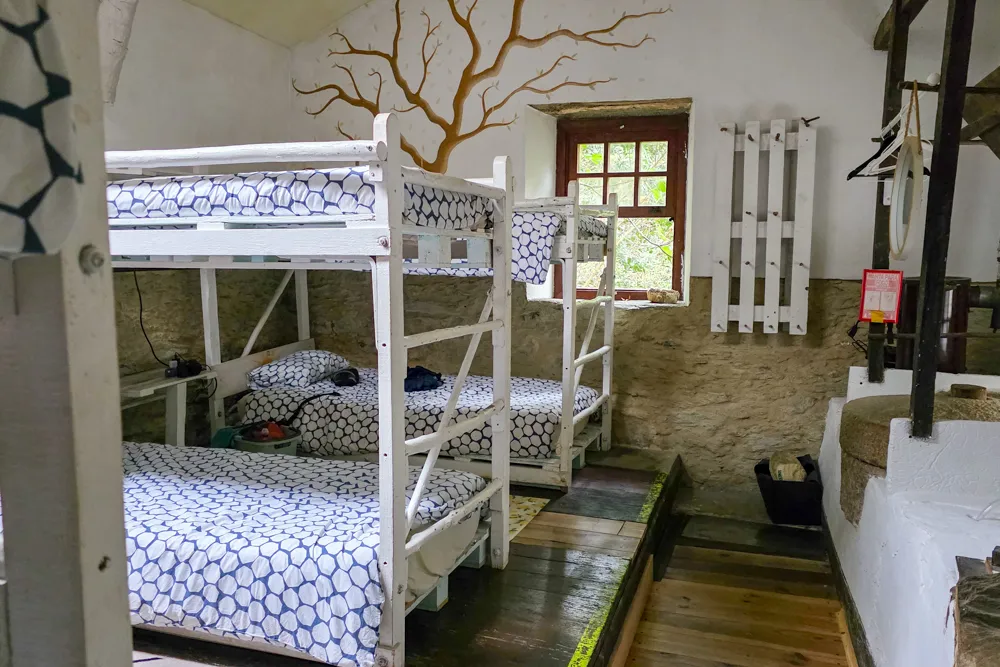
In most municipal hostels I simply walked in between two and four in the afternoon. That worked perfectly. There were always beds available and I never had to hurry. Sometimes I reserved via WhatsApp and surprisingly often I booked through Booking. On this route that is completely normal and often very convenient, especially when you arrive in a village with only one or two places to stay.
A sleeping bag or liner is still essential. In many hostels you get a basic bed with a paper sheet and pillowcase. Blankets are usually provided, but you never know how often they are washed, so I try to use them as little as possible.
What to pack for the Camino?
One of the most common questions before setting off is simple: what do you actually need to bring? The short answer is that the less you carry, the more pleasant your walk will be.
For this Camino I used a 30 liter backpack, the Gregory Juno. That size was perfect. On the Francés I once carried a 58 liter pack and that was far too big. You automatically end up taking more than you need.
My basic gear included a lightweight sleeping bag, a pareo to use as a towel (and also as a scarf, curtain or dress), three sets of clothes, mini toiletries and sandals for the hostel. I usually slept in my hiking clothes to keep things simple.
The most important items are good hiking shoes, a sleeping bag or sheet bag, comfortable hiking clothes, a rain jacket or poncho and a small first aid kit for possible blisters or sore spots. That is really all you need.
🎒 My full packing list can be found here, with all the clothing, toiletries, electronics and first aid items I take with me.
You also do not need to do weeks of research or buy expensive gear. Start with what you already have and supplement only where necessary. Along the way you will quickly notice what works and what does not.
As a guideline for weight, you can aim for about ten to twenty percent of your body weight. If you weigh around seventy kilos, then seven to fourteen kilos is fine. Anything below ten kilos usually feels best.
Luggage transportation on the Camino Portugués from Lisbon
Arranging luggage transport between Lisbon and Porto is unfortunately a bit more difficult than on the section from Porto onwards. Many well-known companies only offer their services from Porto, so you have fewer options on the first part of the route. It is possible, but expect slightly higher prices. One company that does offer this service is Top Santiago, although you will pay more than you might be used to on other Caminos.
There are also no reliable daily luggage services on this stretch of the Portugués, at least none that I was able to find. Because of this, most pilgrims simply carry their own bags here. Once you reach Porto, it becomes much easier and you can choose from several providers that offer affordable backpack transport.
Food & drinks on the Camino Portugués
There is no shortage of food and drinks on the Portuguese Camino. Almost every day you pass through villages and towns with cafés, pastelarias and small restaurants. Supermarkets are also well spread out along the route. What stood out to me between Lisbon and Porto is that you rarely see a traditional pilgrim menu, while this is quite common on the Camino Francés. Here you more often order à la carte or pick up something from the supermarket.
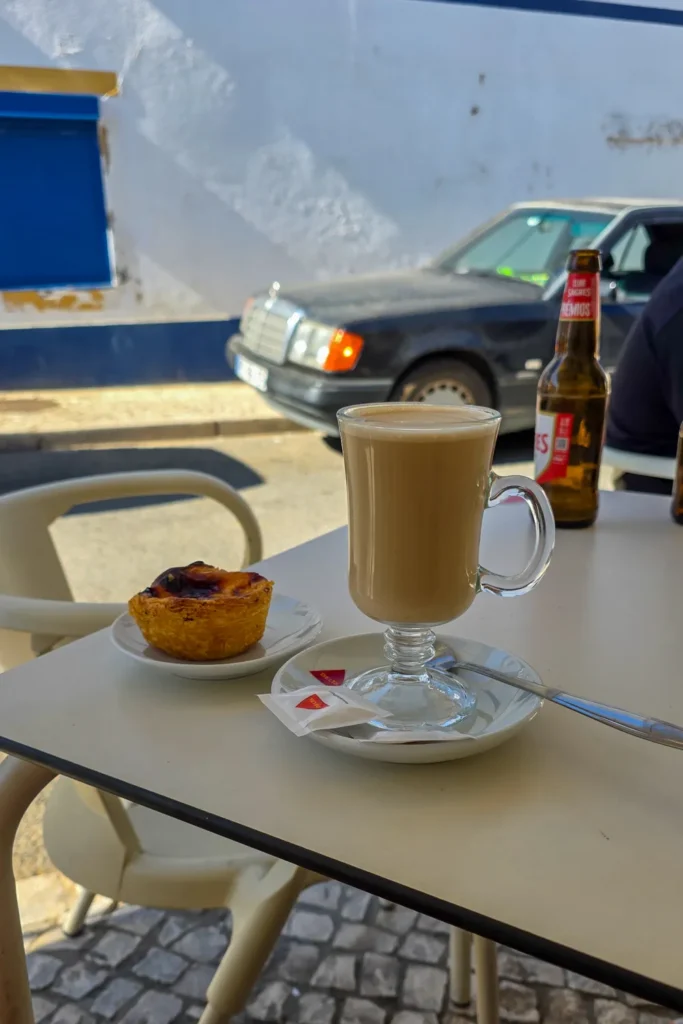
My routine was simple. Every morning I stopped somewhere for coffee and a pastel de nata. For lunch I usually grabbed something from the supermarket, often a salad, empanada or sandwich. Dinner was often the same, because I did not always feel like waiting for restaurants to open. In Portugal, many kitchens only start serving around 7:30 in the evening.
Many hostels have a kitchen where you can heat something up, and sometimes you will find a microwave or basic cooking facilities. It makes it easy to prepare something simple when you arrive tired or when the weather has been a bit rough.
Transportation
How do you get to the starting point of the Camino and later travel back home? Fortunately, the section of the Camino Portugués between Lisbon and Porto is easy to reach.
By airplane
Starting in Lisbon is convenient. Lisbon Airport is a major international hub with many daily flights from different parts of the world. From the airport you can reach the city center quickly by metro or bus.
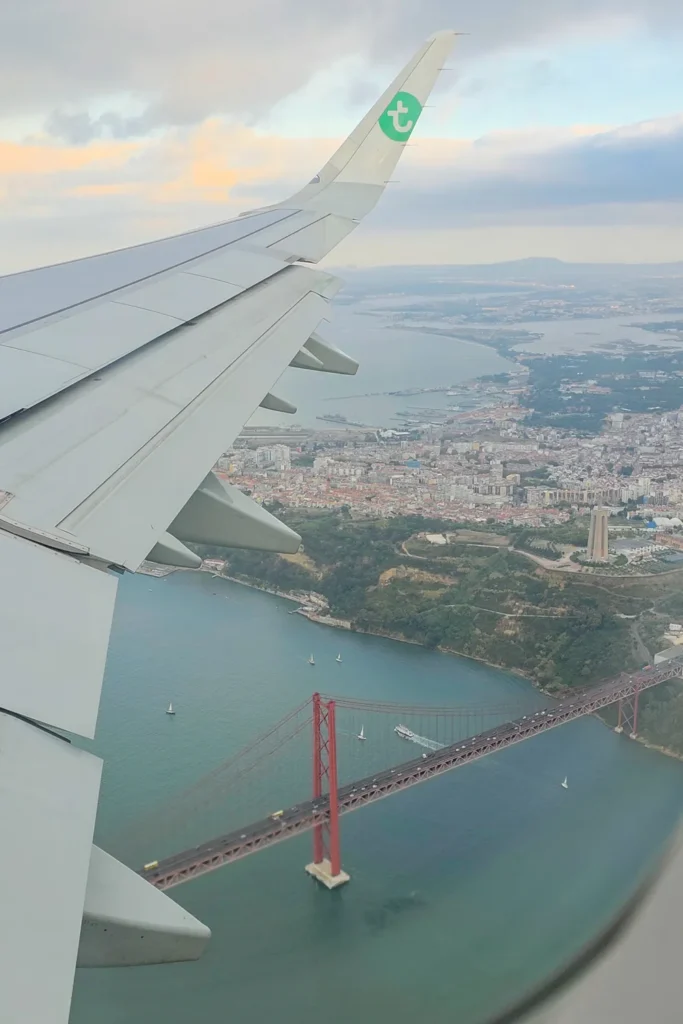
For your return trip you can also fly directly from Porto Airport. If you finish in Santiago instead, there are direct bus connections from Santiago to Porto Airport. From Santiago you can also travel to Madrid by high speed train in about three hours, which can be a good option if flights from Madrid fit your plans better.
By public transport
It is also possible to reach Lisbon overland. This takes more time and requires some planning, but it can be an interesting way to travel. Most routes pass through major hubs such as Paris, Barcelona or Madrid before continuing into Portugal. From Spain you usually travel via Badajoz to Portugal, and from Entroncamento you can take a direct train to Lisbon.
If you prefer to plan everything in advance, check international rail platforms like Rail Europe or the national rail services of the countries you travel through.
How to prepare for your Camino?
The Camino Portugués from Lisbon does not require complicated preparation. You do not need to train for weeks or plan every detail in advance. A few practical steps will make the start of your journey a lot more comfortable.
Good shoes are essential. Your feet will be working hard and you will often be walking on asphalt, so choose something light and comfortable. Trail runners work very well. Go at least one size up so your feet have room to expand and you avoid unnecessary pressure and blisters.
Walk with your backpack a few times beforehand, so you know how it feels when it is fully packed. A few walks of fifteen to twenty kilometers are enough to see how your body reacts. There is no need for a strict training schedule. You build up fitness naturally as you walk. The first days are usually an adjustment, then a rhythm develops quickly.
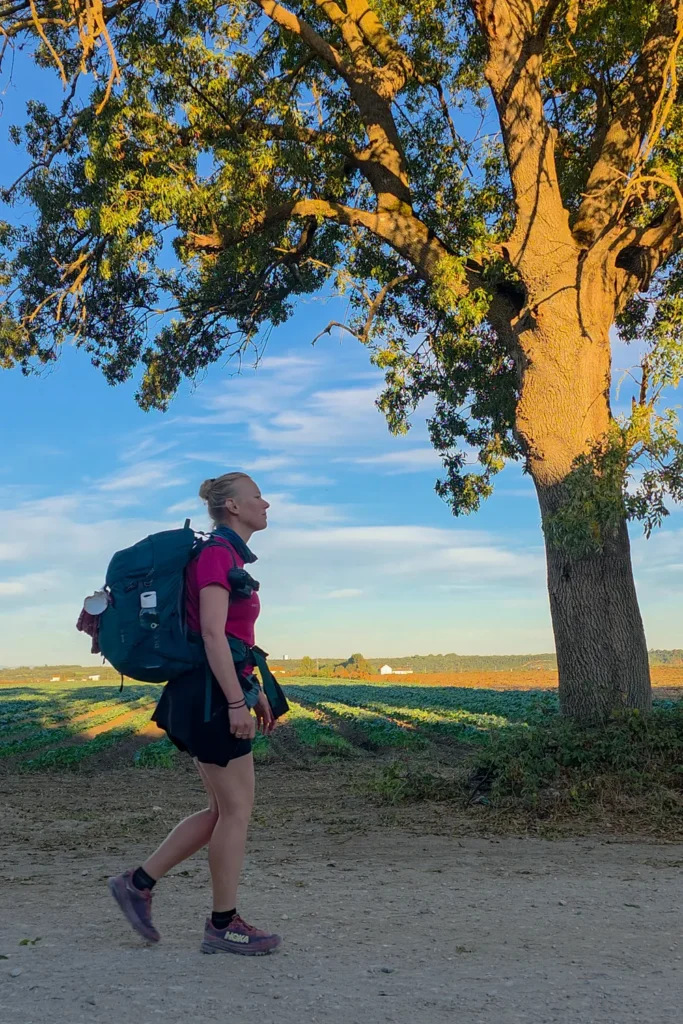
When it comes to planning, you can keep things simple. Between Lisbon and Porto the route is quieter than many other Caminos, and you have plenty of flexibility to decide where to stop each day. Sometimes there is only one hostel and you end up in a private room, sometimes you can choose. That is part of the experience on this section.
Most importantly, start without high expectations. Some days are beautiful, others are more practical, but that mix is exactly what makes this part of the Camino such a rewarding journey.
Frequently Asked Questions
I hope this article has given you a clearer idea of what to expect from the Camino Portugués from Lisbon. During my hike I received many questions, and here are a few of the most common ones.
Read more about the Camino
These were all my tips for the Camino Portugués from Lisbon. If you still have questions, feel free to leave a comment below this article. For more information, you can also get one of these guides:
A Pilgrim’s Guide to the Camino Portugues
The Camino Portugués: From Lisbon and Porto to Santiago
If you are looking for more information or inspiration, you can find plenty of Camino content on my website. Here are a few articles you may enjoy:
- Camino Francés stages explained: route planning & where to stay
- Camino Portugues budget: a detailed cost breakdown (Lisbon to Muxia)
- Hiking the Camino del Norte | The Ultimate Guide
You can also sign up for my newsletter, where I share personal travel stories and practical tips for beautiful destinations.
Hi, and thanks for reading this disclaimer. Maintaining a website takes time and money. If you decide to book or purchase something through the links in this article, I receive a small commission that helps me keep this website running. It costs you nothing extra. Thank you for your support.


Leave a reply