
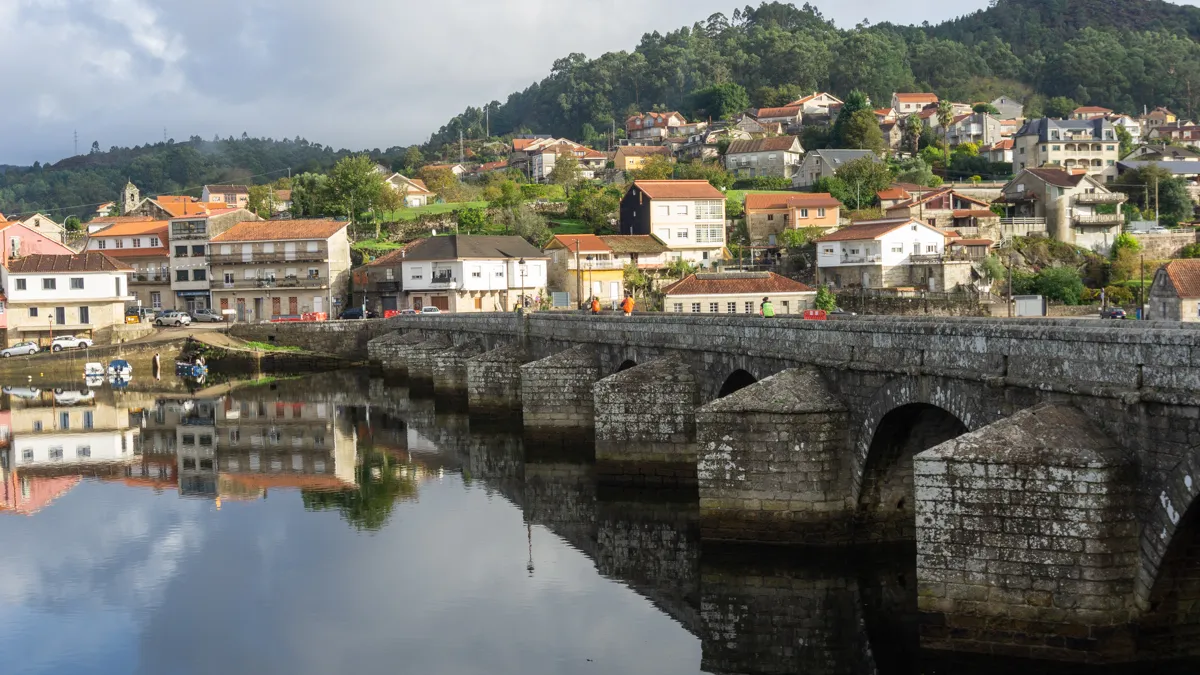
Walking the Camino Portugués from Porto? My guide covers the central route, stages, navigation, weather and what this Camino really feels like.
What is the Camino Portugués?
The Camino Portugués is one of the best-known pilgrimage routes to Santiago de Compostela. Officially, it starts in Lisbon. From there you walk straight through Portugal, passing towns like Santarém, Tomar and Coimbra, until you reach Porto. After that, you cross into Spain and continue toward Santiago.
In practice, most pilgrims start in Porto. At around 250 kilometers, the distance is manageable and fits comfortably into a two-week trip. The route is well marked, there are plenty of hostels and cafés, and the atmosphere immediately feels like a classic Camino. It is social, easy to follow and the infrastructure is very reliable.
Since I wanted to walk the full Camino Portugués, I started in Lisbon. It felt right to follow the route from the beginning and experience how the atmosphere shifts once you get closer to Porto and the number of pilgrims suddenly increases. In this article, I focus mainly on the stretch from Porto to Santiago, since that is where most people begin.
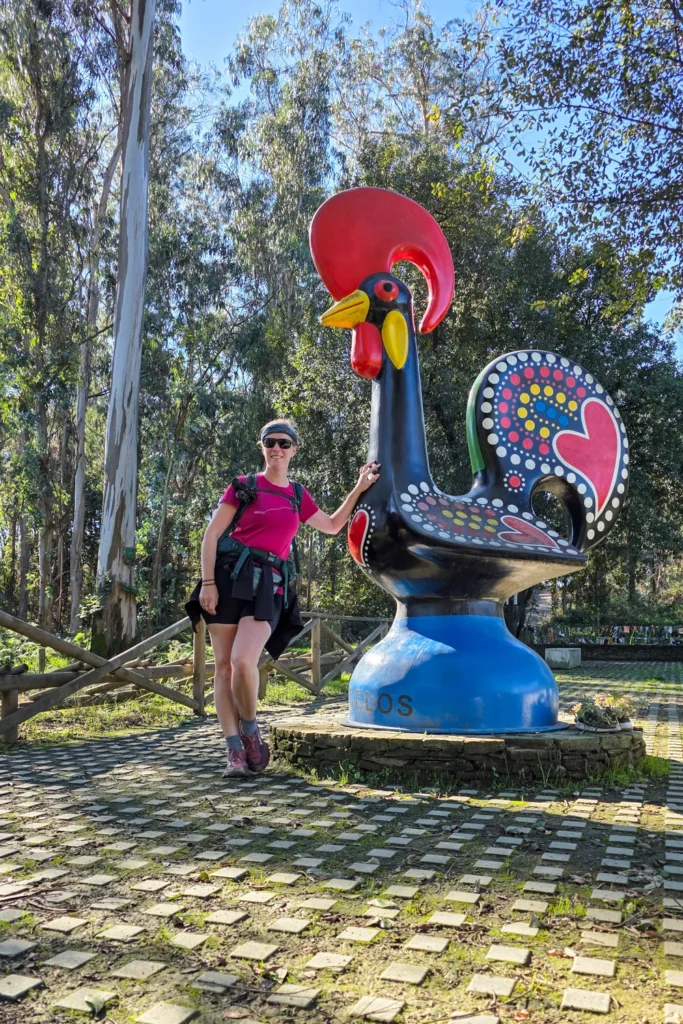
Different variants between Porto and Santiago
When you walk the Camino Portugués from Porto, you can choose between several variants. They all come together again in Spain, but the feel of each route is quite different.
Camino Central (central route)
This is the most common option. It runs inland through villages, vineyards and small towns. The waymarks are clear, there are many hostels and cafés, and you rarely go long without passing another pilgrim. It feels like a true Camino from the first kilometers.
Camino da Costa (coastal route)
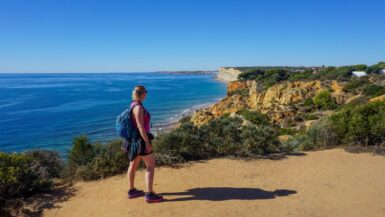
This route follows the coastline and is flatter. The trail is a mix of quiet roads and forest paths, and you regularly get views of the ocean. If you like walking with a sea breeze and wide horizons, this variant is ideal. It joins the Central route in Redondela.

Senda Litoral
A variation of the coastal route. Here you stay even closer to the water, often walking on wooden boardwalks right along the beach. Many pilgrims combine the Litoral with the coastal route.
Variante Espiritual (spiritual route).
After Pontevedra you can branch off toward the coast. This variant leads through small fishing villages and reconnects with the Central route in Padrón. Its unique element is the boat trip from Vilanova de Arousa.
Many pilgrims mix routes or switch halfway through. You can easily decide what feels right once you’re on the trail.
Which route did I choose and why?
I chose to walk the Central route. That felt natural because I was already coming from Lisbon and the Central continues that line seamlessly. I also wanted to continue walking after Santiago, toward Finisterre and Muxía, and the Central fit that plan best.
A few years earlier I had walked a small part along the coast, so I felt less drawn to it this time. From Porto, I walked to Santiago in nine days. The first days were warm and sunny, then the weather became more unsettled and one day I ended up completely soaked. I also had to adjust to the sudden increase in crowds after the quiet section before Porto, but after a few days I found my flow again. From that moment on, it felt fully like my Camino.

The Camino between Porto and Santiago is clear, varied and easy to follow. Below you can read what to expect along the way, how the route is structured and how to navigate it comfortably.
What can you expect between Porto and Santiago?
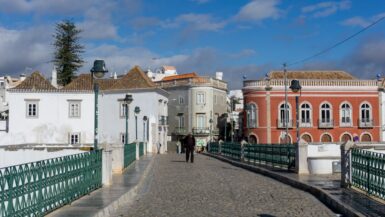
It takes a little while to leave Porto behind, but once you do, the surroundings quickly become greener. Along the way you pass through towns like Barcelos and Ponte de Lima. In Valença you cross the border into Spain, with the Miño River as a natural dividing line.
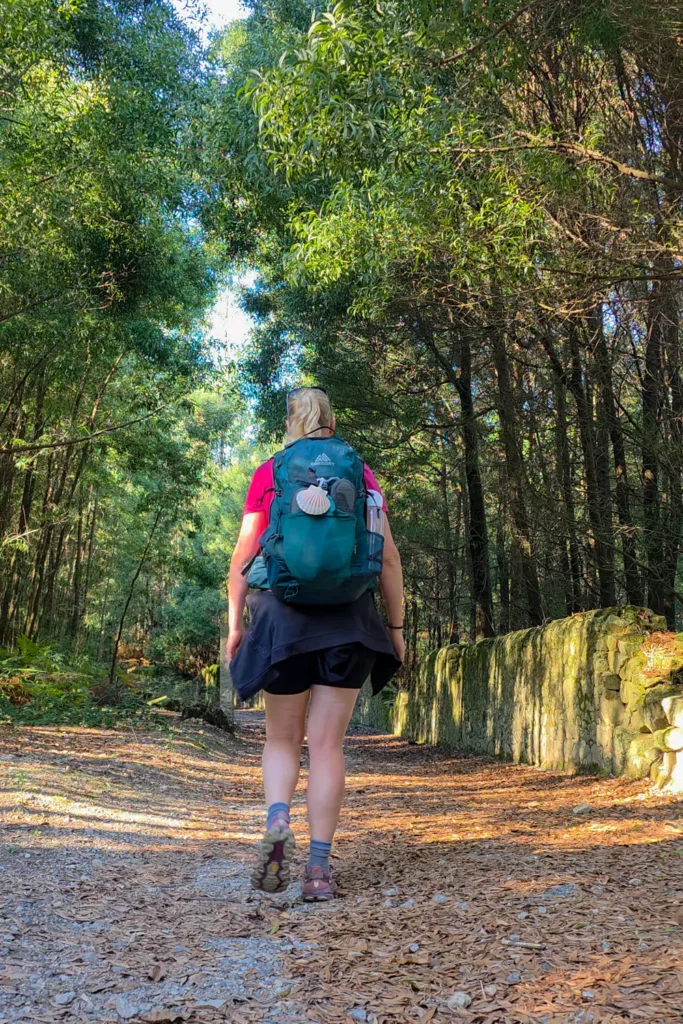
In terms of scenery, expect quiet country roads, forests full of eucalyptus trees, historic bridges, vineyards and small villages. You’ll meet other pilgrims throughout the day, which makes this section feel like a classic Camino from the start.
The transition from Portugal to Spain is very noticeable. The architecture shifts, the landscape becomes wetter and more rolling, and the villages have a different feel. After Ponte de Lima the route becomes hillier, with the most well-known ascent being the climb between Ponte de Lima and Rubiães.

Camino Portugués stages between Porto and Santiago (Central route)
Between Porto and Santiago you can divide your walking days however you like. That freedom is one of the nicest parts of the Camino. I rarely follow a fixed plan myself. I adjust my day to how I feel, how my feet are doing and where I want to spend the night.
Still, having a rough outline helps. The breakdown below comes from Gronze, one of the most used platforms among pilgrims. See it as a guideline, since every guidebook and app gives slightly different distances.
- Porto – Vilarinho (26.5 km – easy)
- Vilarinho – Barcelos (27.3 km – easy)
- Barcelos – Ponte de Lima (34.5 km – average)
- Ponte de Lima – Rubiães (17.4 km – average)
- Rubiães – Tui (19.1 km – easy)
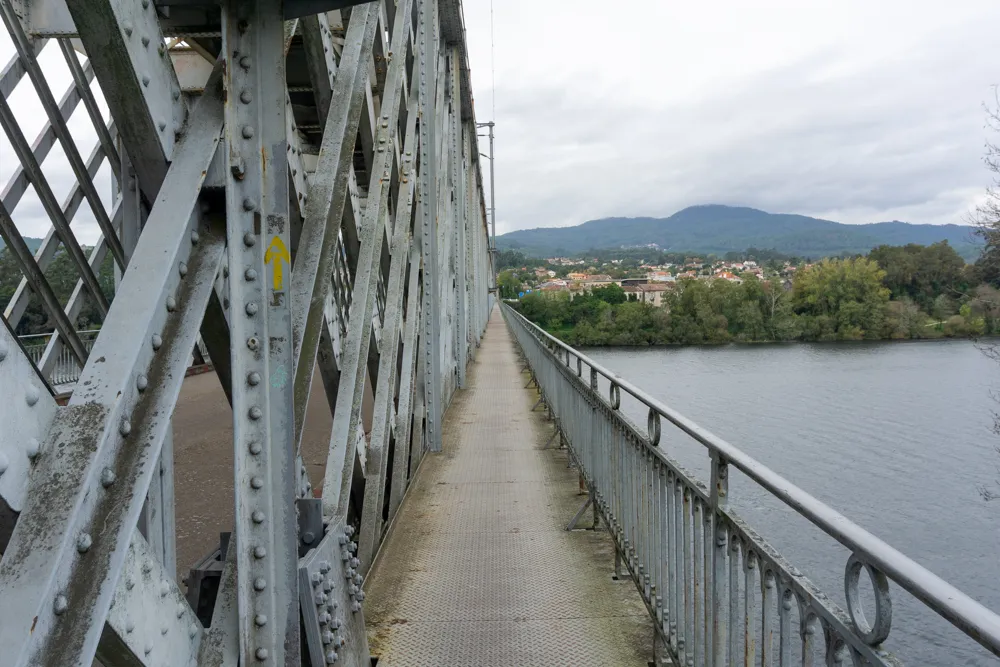
- Tui – Redondela ( 31.9 km – average)
- Redondela – Pontevedra (19.8 km – easy)
- Pontevedra – Caldas de Reis (21.1 km – easy)
- Caldas de Reis – Padrón (18.6 km, easy)
- Padrón – Santiago de Compostela (24.4 km, easy)
Most pilgrims shorten or extend these stages. I walked from Porto to Santiago in nine days and that felt very natural.
Curious about where to stay and how I did the stages? Read: Camino Portugués stages: routes, planning and where to stay
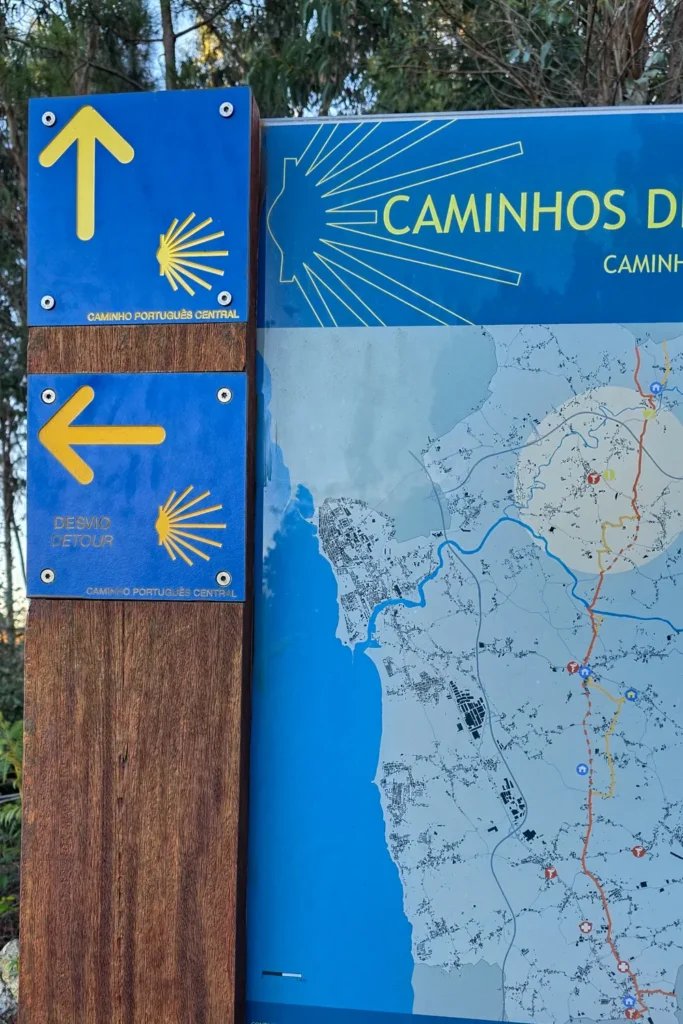
Navigation is simple. You just follow the yellow arrows and shells. They are painted or placed on walls, lampposts, trees and paving stones. After a few kilometers you start noticing them automatically, even if you have never done a long-distance walk before.

One thing I noticed on this section is the number of detours you can take. These usually guide you away from a busy road or offer a more pleasant side path. I took almost all of them and always found them nicer to walk, even if they added a few hundred extra meters.
Apps can help, even when you don’t necessarily need them to find the way. I used Wise Pilgrim and Buen Camino mainly to check my location, see the distance to the next village, and where to sleep. They are also handy when you’re unsure if you have reached a detour or not.
The best part is how little you need to think about the route. You follow the arrows, stay aware of your surroundings and choose a detour when it feels quieter or safer. If you do that, you will naturally find your way to Santiago.
Best time to walk the Camino Portugués
The best time to walk from Porto to Santiago really depends on what matters most to you. This route can be walked year-round, but the atmosphere changes a lot with the seasons.
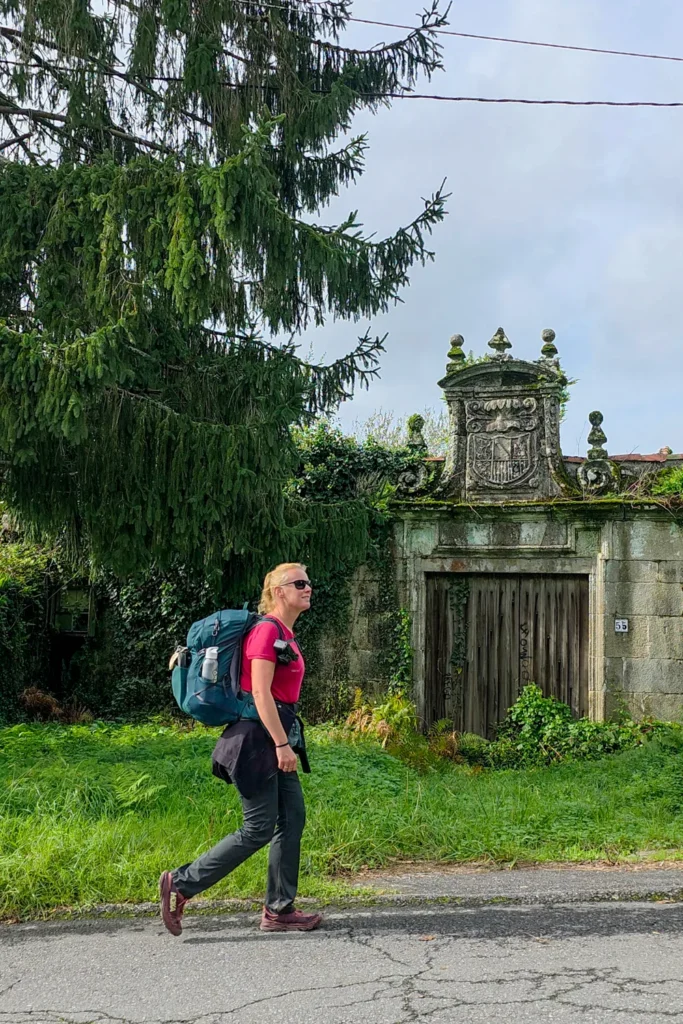
I left Porto on October 26 and arrived in Santiago on November 3. I knew the chance of rain would be higher, and that turned out to be true. I had one day of extreme weather and a few more that were changeable. Even so, most days I walked in a t-shirt because the temperatures were surprisingly pleasant. What stood out most was how quiet it was. In many hostels I only shared a room with one or two other pilgrims, and a few times I even found a cheap private room last minute.
If you prefer sunshine and a more social Camino, May to September is the best fit. These months are busier and more accommodations are open.
If you value calmer trails and milder temperatures, March, April and October are ideal. You usually have more space in the hostels and you can often decide last minute where to stop.
Walking in winter (November to February) is possible too, but expect wetter and cooler days and fewer open places to stay. You simply need to plan a bit more.
Accommodation on the Camino Portugués between Porto and Santiago
Between Porto and Santiago, finding a place to sleep is generally easy. The villages are close together and you can choose from municipal albergues, private hostels, guesthouses and the occasional hotel almost every day.
On this section I went for more comfort. I didn’t stay in any municipal albergues but chose private hostels and, quite often, a private room. The first night I simply walked in. After that, I usually made same-day reservations, mostly through Booking and occasionally via WhatsApp.

Municipal albergues are the cheapest and very basic. Private hostels feel a bit more homey and usually have smaller dorms and better facilities. Along the Central route you’ll also find plenty of guesthouses and affordable rooms, even outside the high season.
Because I stayed mainly in private rooms and comfortable hostels, I hardly used my sleeping bag. If you stay in municipal albergues you will need one.
In the busy summer months (June to August) many pilgrims book ahead, which can be helpful if you don’t want to take any risks. Outside peak season, you can usually walk in spontaneously and adjust your plans based on your energy or the weather.
What to pack for the Camino?
As little as possible. The lighter your bag is, the nicer you walk. You don’t need to stock up on food, because you pass through villages every day with cafés and often small supermarkets.
I walked with a thirty liter backpack from Gregory and that size was perfect. With a bigger bag you tend to bring more than you actually need. My basic gear was simple: a water bottle, lightweight sleeping bag, a pareo as a towel, three sets of clothes (you can wash almost anywhere), a small toiletry bag, a first aid kit, a raincoat, a down jacket and sandals for indoors. Because I often stayed in private rooms, I hardly used my sleeping bag.
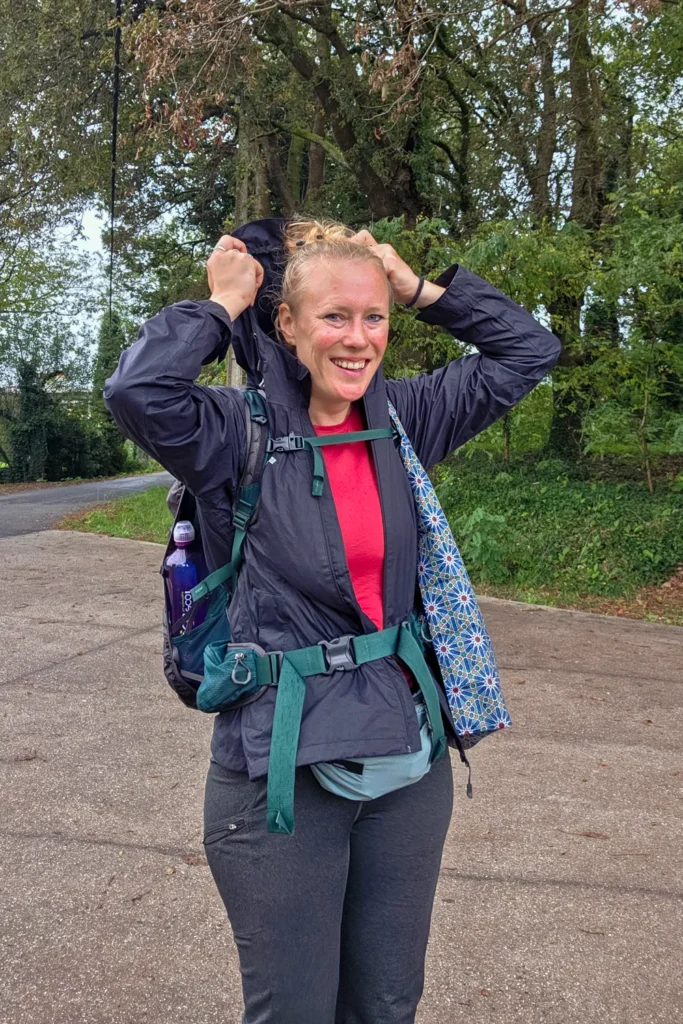
You really don’t need much more. In warmer months you can leave the down jacket at home. Along the way you’ll naturally figure out what works for you and what you could have skipped. As a rough guideline, aim to carry ten to twenty percent of your body weight. Under ten kilos usually feels best and is more than enough for the Camino.
Luggage transportation on the Camino Portugués
Between Porto and Santiago, luggage transport is well organized and a comfortable option for many pilgrims. Several companies can move your backpack from one accommodation to the next. It makes walking lighter and longer days easier, especially if you struggle with shoulder or back pain. You drop your bag off in the morning, attach a label and it’s waiting for you at your next stop in the afternoon. Companies that offer this on the Camino Portugués include Pilbeo and Top Santiago.
Whether you use it is entirely up to you. Many pilgrims carry their own backpack, others choose the convenience. The most important thing is that you walk comfortably and enjoy the journey.
Food and drinks on the Camino Portugués
Between Porto and Santiago you never have to worry about food or drinks. You walk through plenty of villages every day where you’ll find cafés, pastelarias, small restaurants and supermarkets. The rhythm of grabbing a coffee, eating something small and walking on feels very natural on this part of the route.

What stood out to me compared to the section before Porto is that the pilgrim’s menu appears more often here. Some hostels offered a communal dinner and I occasionally saw a pilgrim’s menu on café boards again. Simple, affordable and exactly what you need after a day of walking.
Bring a refillable water bottle, because you can fill it almost everywhere. Tap water in both Portugal and Spain is safe to drink, and most villages have at least one fountain. If the water isn’t drinkable, it’s always clearly marked.
Transportation: how to get there (and return home)
Getting to the starting point of the Camino Portugués and traveling back home is quite straightforward, especially if you begin in Porto.
By airplane
Porto has a large international airport with many direct connections within Europe and a number of long-haul flights as well. From the airport, you can start walking straight away through a marked connecting path that links to the Central route. Most pilgrims, however, take the metro into the city and begin at the cathedral. Check Skyscanner for plane tickets.

For your return journey, flying out of Santiago is slightly less convenient. Direct flights are limited and usually seasonal, so many travelers connect through Madrid or Barcelona. If you prefer a direct flight, Porto is often the easiest option. Frequent buses run between Santiago and Porto Airport and can be checked through platforms like Busbud.
Another popular option is Madrid. High-speed trains run between Santiago and Madrid in roughly three hours, which makes it an easy onward connection for international flights.
By train
If you prefer to travel more sustainably, you can reach Porto by train. Depending on where you start, the route usually connects through major hubs such as Paris, Madrid or Vigo. From Vigo, trains run daily to Porto and the line also serves Santiago, making it an easy option for the return trip.
International rail tickets can be checked through operators such as Comboios de Portugal (CP), Renfe in Spain, or international booking platforms like Rail Europe.
How to prepare for a Camino?
A Camino does not require weeks of strict training or detailed planning. If you have basic fitness and you enjoy walking, you will be fine. A few practical things make the start much easier, though.
Good shoes matter the most. You walk long days and often on pavement, so something light and comfortable works best. Trail runners are perfect. Choose a size bigger than you normally wear, because your feet will need the space during warm days or long stages.
Try walking a few times with a filled backpack before you leave. A couple of fifteen to twenty kilometer walks is already enough to understand how your body reacts. During the Camino you will naturally build up endurance. The first days take a bit of energy, then a steady rhythm develops quickly.
The credential, your pilgrim passport
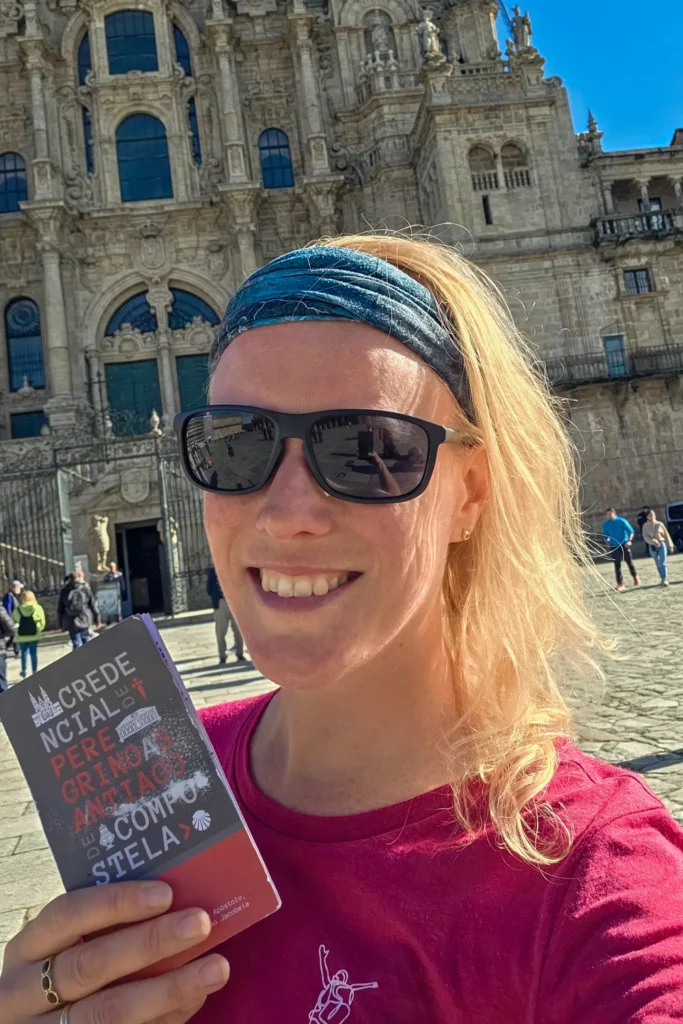
Before you start, you need one essential item. The credential. This small booklet is your pilgrim passport and you collect stamps in it along the way. In Santiago, it shows that you walked the route in the right order. With this, you can receive the Compostela, the certificate given to pilgrims who complete the Camino.
To receive a Compostela, you must walk at least one hundred consecutive kilometers on a recognized Camino route and finish at the cathedral in Santiago. The stamps in your credential prove that you did not skip sections. If you only walk the final one hundred kilometers, you need a stamp at the start and at the end of each stage. If you walk further than the minimum distance, one stamp per day is usually enough, although most people collect more. Source: Oficina de acodiga al peregrino.
You can get stamps almost everywhere along the Camino, in cafés, hostels, churches and sometimes in small shops.
If you prefer to start your trip with everything ready, you can buy a credential in advance from many national pilgrim associations. I personally bought mine for the Camino Portugués at the Sé Cathedral in Lisbon. Most larger churches and some tourist offices also sell them.
Frequently Asked Questions
By now you have a good idea of what the Camino Portugués from Porto is like. Still, there are a few questions that come up often. Here are the most common ones.
If you still have a question about walking the Camino Portugués (Central), feel free to leave a comment below this article.
Read more about the Camino
This was it. All my tips for the Camino Portugués from Porto. Want to dive deeper into this Camino or explore the different routes? These guides are helpful:
The Camino Portugués: From Lisbon and Porto to Santiago
A Pilgrim’s Guide to the Camino Portugues
Since I have walked quite a few miles in Portugal and Spain by now, you will find many more Camino tips on this website. Have a look at one of these articles:
- Trip reports of my Camino Portugués (from Lisbon)
- Camino Portugues budget: a detailed cost breakdown (Lisbon to Muxia)
- 16 Best Books on Camino de Santiago
You can also sign up for my newsletter, where I share personal travel stories and tips for beautiful destinations.
And a small note at the end. Maintaining a website takes time and money. If you book something through the links in this article, I receive a small commission that helps keep this website running. Thank you for your support.


Leave a reply