
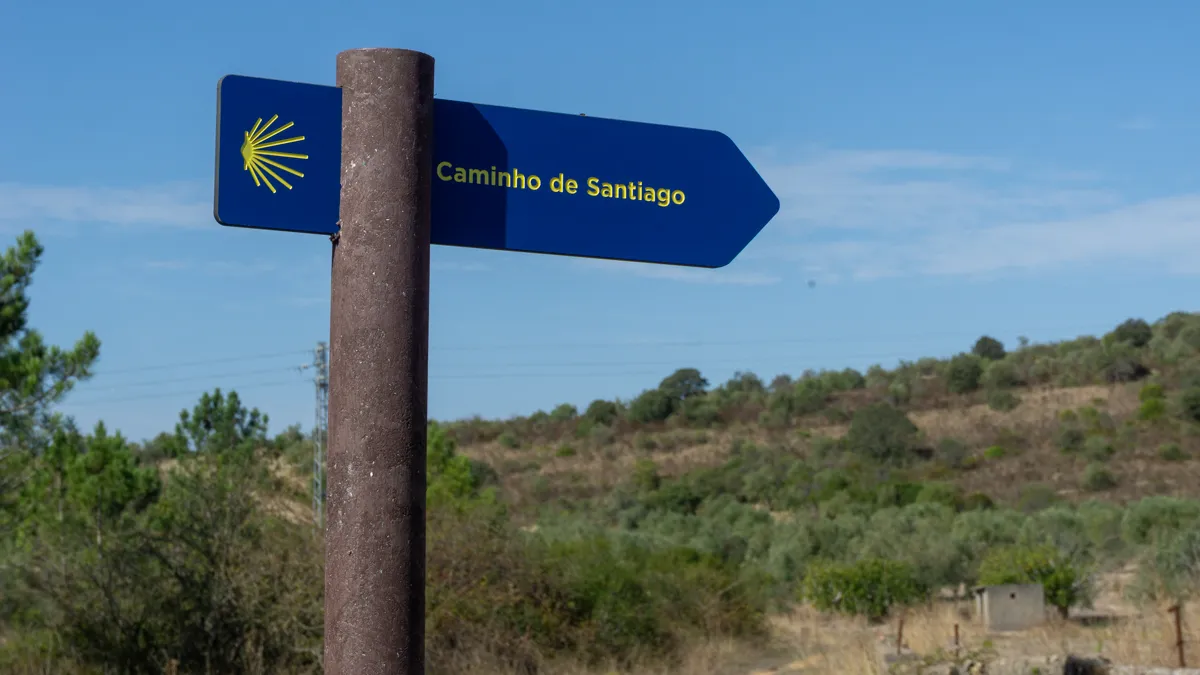
A complete guide to the Camino Portugués stages, from Lisbon to Santiago, including popular stage layouts, my personal planning and practical tips on where to stay.
How do the stages of the Camino Portugués work?
The Camino Portugués is one of the most popular pilgrimage routes to Santiago de Compostela. Most pilgrims start in Porto, but officially the route begins in Lisbon and stretches for about 650 kilometers. Along the way, you walk through historic cities and quiet villages, sometimes along the coast and sometimes further inland, depending on the variant you choose.
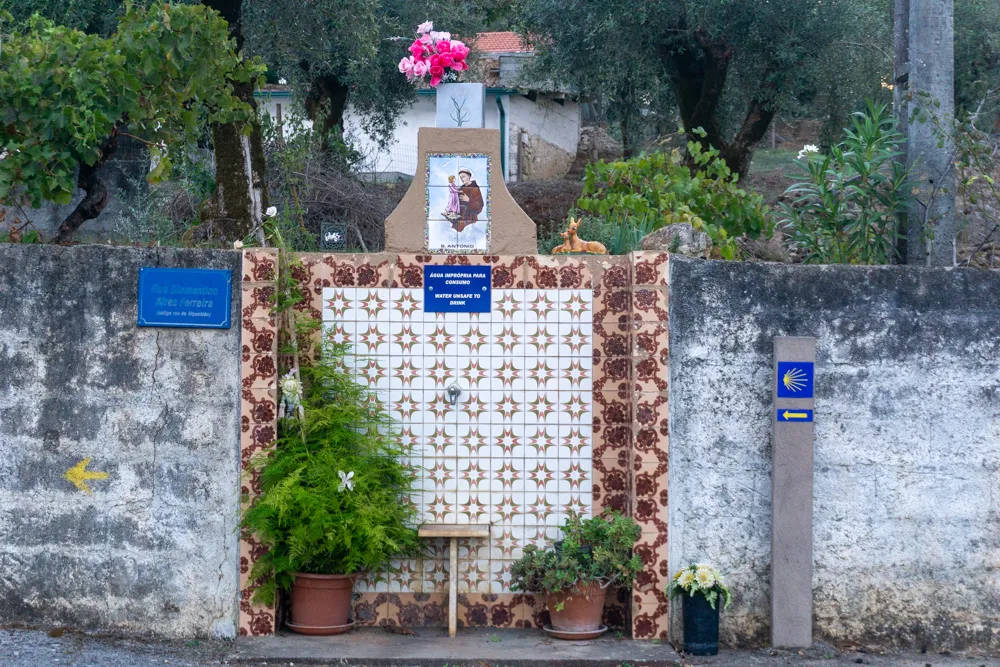
Many people assume there is a fixed layout for the daily stages, but in reality that is not the case. There are several commonly used stage layouts, for example on websites like Gronze, in apps such as Buen Camino or Wise Pilgrim, and in printed hiking guides. When you compare them, you will notice that they often differ slightly. Still, many pilgrims use one of these layouts as a starting point and then adjust their planning along the way. Sometimes because there is a pleasant albergue a bit further on, sometimes because your body needs a shorter day, or simply because the weather is not cooperating.
I walked the Camino Portugués in the fall of 2025 and used a combination of the official stages and my own choices. In this article, I explain how the Camino Portugués stages are generally structured, share my personal stage planning, and give practical tips to help you plan your own Camino Portugués stages.
Camino Portugués stages: Lisbon to Porto
The first section of the Camino Portugués runs from Lisbon to Porto. This stretch is quieter than the route starting in Porto, and the distances between villages and hostels can be a bit longer.
Commonly used stage layout: Lisbon to Porto
Below is the stage layout for the Camino Portugués according to Gronze. For each stage, I have also included the municipal hostel or alternative pilgrim accommodation.
Vila Franca de Xira – Azambuja
20 km – Easy Albergue de peregrinos de Azambuja
Santarém – Golegã
30.7 km – Moderate Albergue Solo Duro – Casa da Tia Guida
Tomar – Alvaiázere
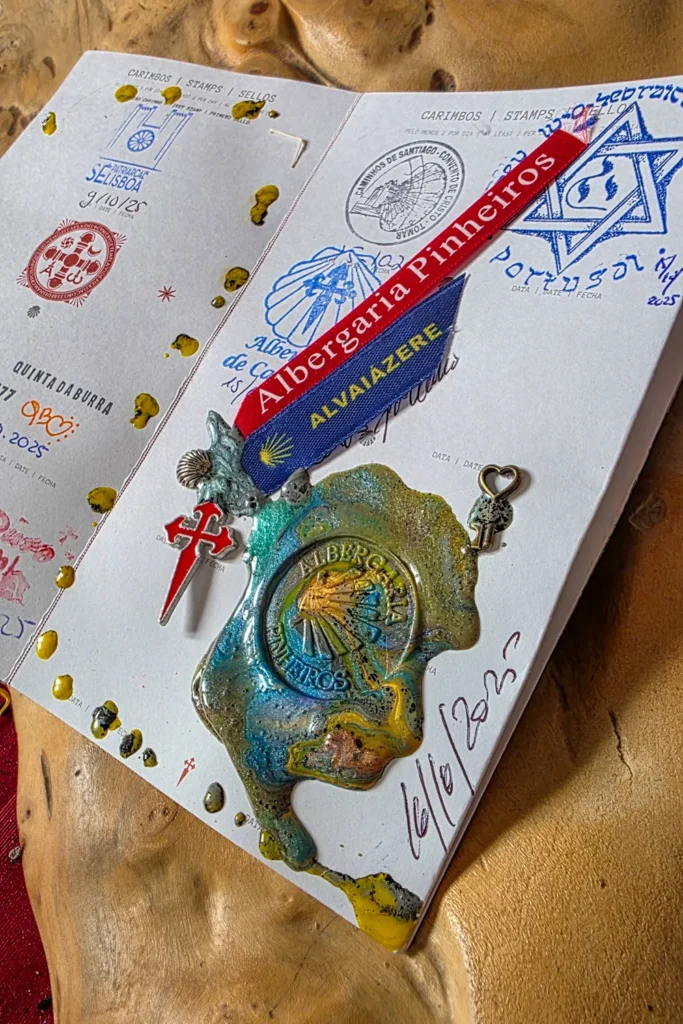
31.7 km – Moderate Albergaria Pinheiro’s
Alvaiázere – Alvorge
22.7 km – Moderate Albergue de peregrinos de Alvorge
Coimbra – Sernadelo
24.8 km – Moderate Albergue-Residencial Hilário
Águeda – Albergaria-a-Velha
15.8 km – Easy Albergue de peregrinos Rainha Dona Teresa
Albergaria-a-Velha – São João da Madeira
28.8 km – Moderate Acogida da Santa Casa da Misericórdia de São João da Madeira
São João da Madeira – Grijó
19 km – Easy Albergue de peregrinos São Salvador de Grijó
My stage layout: Lisbon to Porto
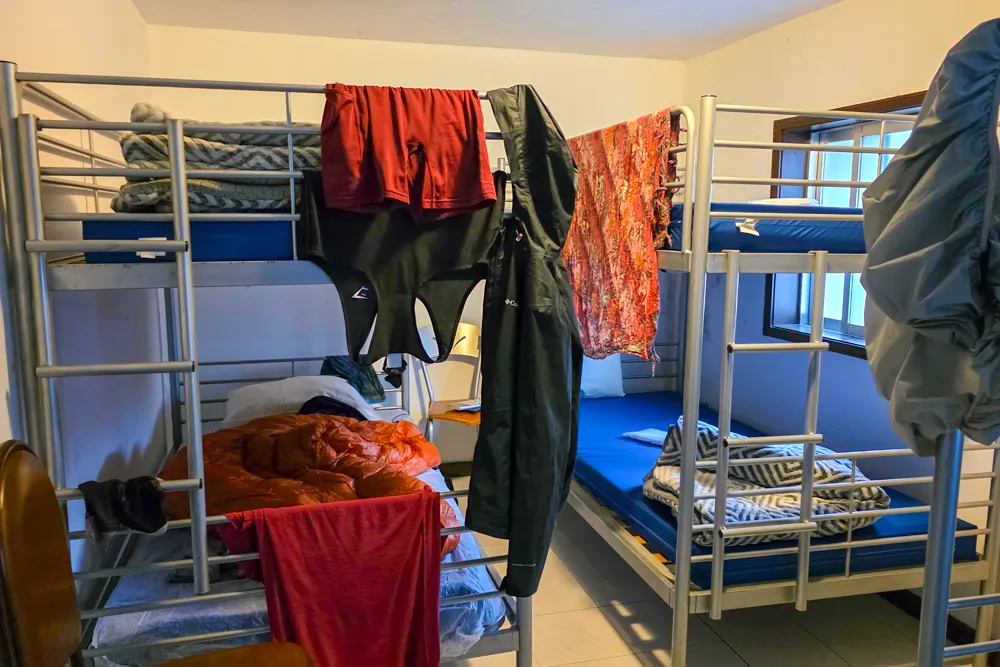
Below is my day-to-day breakdown for the route between Lisbon and Porto, including distances and the accommodations where I stayed (along with the prices I paid). Please note that these distances are based on my own GPS recordings, so they may differ slightly from what you see in apps or guidebooks.
For more information about the Camino Portugués from Lisbon to Porto, check out the article Camino Portugués from Lisbon to Porto: tips from personal experience
Camino Portugués stages: Porto to Santiago de Compostela
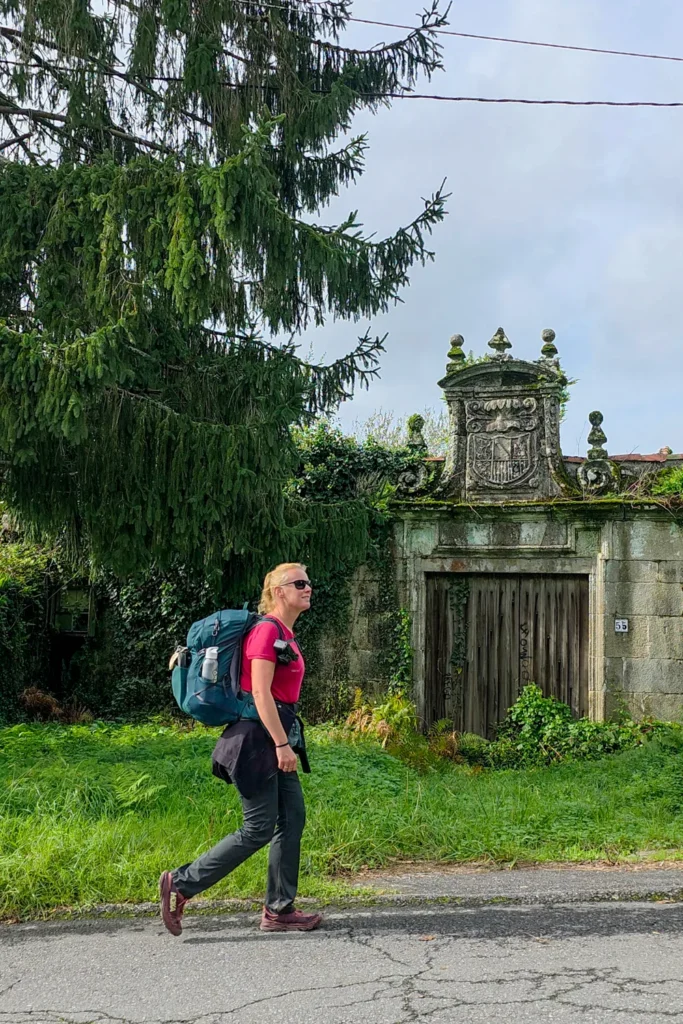
Most pilgrims begin their Camino Portugués in Porto. The city is easily accessible, the distance is manageable, and you have several route options right from the start. You can choose to walk along the coast or head inland. I followed the Central route, the classic inland variant that passes through towns such as Barcelos, Ponte de Lima, and Tui.
Below, I will first share the stages of the Central route (both the “official” layout and the stages I personally walked), followed by the layouts for the Coastal route and the Spiritual variant.
“Official” stages from Porto to Santiago (Caminho central)
This is the standard stage layout for the Central route starting in Porto, according to Gronze.
Porto – Vilarinho
26.5 km – Easy Albergue Casa da Laura
Ponte de Lima – Rubiães
17.4 km – Moderate Albergue de peregrinos de Rubiães
Rubiães – Tui
19.1 km – Easy Albergue Convento del Camino
Redondela – Pontevedra
19.8 km – Easy Albergue de peregrinos Virgen Peregrina
My stage plan: Porto to Santiago
As you probably know by now, I rarely follow the “official” stages of the Camino. Instead, I see how I feel each day and decide how far I want to walk. I also simply enjoy staying at unique or special locations. Below is the stage layout I followed from Porto to Santiago, including the accommodations where I stayed and the prices I paid.
Looking for more practical tips for the Camino Portugués from Porto? Check out: Walking the Camino Portugués from Porto to Santiago: what to expect

Camino Portugués de la Costa
What do the stages look like if you walk from Porto along the Coastal route?
Porto – Labruge
24.5 km – Easy
Labruge – Póvoa de Varzim
14 km – Easy
Póvoa de Varzim – Marinhas
24.5 km – Easy
Marinhas – Viana do Castelo
20.8 km – Easy
Viana do Castelo – Caminha
26.8 km – Moderate
Caminha – Porto Mougás
23.5 km – Easy
Porto Mougás – A Ramallosa
16 km – Easy
A Ramallosa – Vigo
22.5 km – Easy
Vigo – Redondela
15.4 km – Easy
From Redondela, you can rejoin the Central Way.
The Senda Litoral is the coastal route’s beach variant. During the first stage, this version follows a significantly different path than the Camino da Costa, running directly along the ocean and across long boardwalks. From Vila do Conde onward, the two routes almost entirely converge, passing through the same locations as the standard coastal route. Since the stops are identical, I follow the same stage layout as the Camino da Costa.
Camino Espiritual stages
This is an overview of the stages of the Camino Espiritual. It begins just after Pontevedra.
Pontevedra – A Armenteira
20.5 km – Moderate
A Armenteira – Vilanova de Arousa
23.4 km – Easy
Vilanova de Arousa – Padrón
35 km – Moderate
This is the route with the boat ride on the Río Ulla, a popular variation among pilgrims.
Tips for planning your own Camino Portugués stages
The great thing about the Camino Portugués is that you don’t need a fixed schedule. While the official stages provide a solid foundation, chances are you’ll want to adjust things as you go.
I recommend starting at a more leisurely pace, especially if you’ve just stepped off a plane or are coming from a busy period at home. Your body needs time to adjust to the rhythm of hiking every day with a heavy backpack. Many people who attempt long distances right from the start end up with blisters or overuse injuries, forcing them to take unplanned rest days (trust me, I’ve been there). Building up your mileage slowly is the best way to prevent this.

It also helps to avoid planning too tightly. If you see a charming guesthouse along the way or a place just feels right, don’t hesitate to stop. A memorable overnight stay and a bit of flexibility are far better than a rigid schedule that causes stress. For example, I encountered extreme rain during my hike on the Camino Portugués. I was so grateful that I could easily shorten my walking day and book a high-quality accommodation with a washer and dryer at the last minute.
To find hostels and other accommodations, the Gronze website and the apps Wise Pilgrim and Buen Camino are incredibly useful. They allow you to quickly check distances, see which hostels are open, and find nearby supermarkets. Especially during the off-season, opening hours can vary, so double-checking is always a smart move.
Don’t hesitate to plan a rest day in a beautiful city like Coimbra or Ponte de Lima. Giving your body a break makes your Camino more enjoyable and sustainable. That rest day often feels like a true gift in the middle of your pilgrimage.
Reservations vs booking on the go
Between Lisbon and Porto, you usually don’t need to make reservations, but that changes once you leave Porto. The trail gets busier, there are more pilgrims, and popular stopover spots can fill up quickly, especially on weekends or during bad weather.
That said, you can still hike comfortably without a rigid schedule. Municipal hostels (albergues) usually don’t accept reservations and operate on a “first come, first served” basis. If you prefer a private room or have your heart set on a specific hostel, booking a day in advance is helpful. Booking.com is the easiest way to secure private hostels and guesthouses while on the road. I used this frequently, often booking my accommodation in the morning for that same evening.
A combination of both approaches often works best. Make a reservation when you feel the need for certainty, and on other days, just keep walking until you find a spot you like. This flexibility is what makes the Camino so much fun.
Tips for staying at hostels
What should you know about spending the night in a hostel? A sleeping bag or a silk liner is essential because most hostels do not provide bedding. While you might occasionally get a disposable paper sheet, the beds are usually bare. Even in the summer, something warm is nice to have, as temperatures can drop significantly at night.
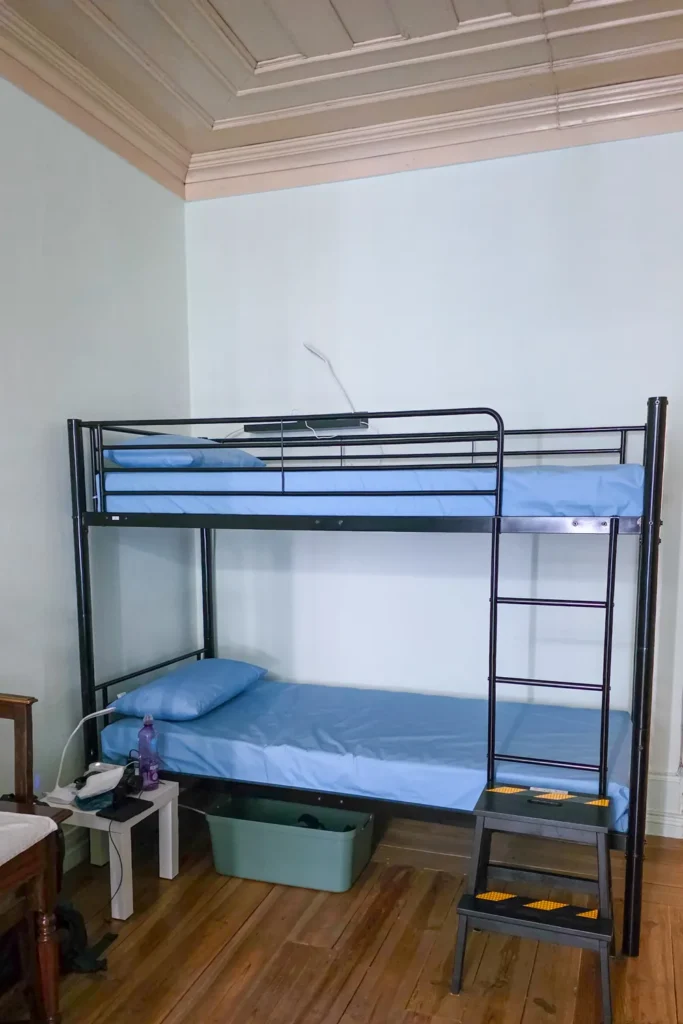
Bring flip-flops for the shower and comfortable shoes to wear in the evening once you’ve taken off your hiking boots. In almost all hostels, boots are not allowed in the dormitories. Also, don’t forget a quick-drying travel towel, as these are rarely provided.
Earplugs are worth their weight in gold. You’ll often sleep in dorms with other pilgrims, and there is almost always someone who snores. An eye mask or a Buff also works well to block out light when people come and go.
Unfortunately, bedbugs do occur on the Portuguese Camino, though less frequently than on the Camino Francés. Always inspect your bed and never place your backpack directly on the mattress; keep it on the floor or a chair instead.
The charm of the Camino lies in the fact that every day is different—a new village, new people, and a new place to sleep. If you stay flexible and listen to your body, the logistics will always fall into place.
Read more about the Camino de Santiago
By now, you should have all the information you need regarding the stages and accommodations on the Camino Portugués. Do you still prefer using a physical guidebook for extra details and tips? Here are a few of my top recommendations:
The Camino Portugués: From Lisbon and Porto to Santiago
A Pilgrim’s Guide to the Camino Portugués Lisbon – Porto – Santiago
Having walked many miles across Portugal and Spain myself, I’ve gathered plenty of advice to help you on your journey. Feel free to explore more Camino tips on this website:
- Walking the Camino Finisterre: tips for the route to the end of the world
- My Travel Diary: walking the Camino Portugués from Lisbon to Santiago and Finisterre
- Camino Francés stages explained: route planning & where to stay
Don’t forget to sign up for my newsletter, where I share travel stories and tips for the most beautiful destinations around the world!
Support this website. Hi there! I hope you found this guide helpful. As you might imagine, maintaining a website involves certain costs. If you decide to book a stay or purchase gear through the links in this article, I may earn a small commission. This support helps me keep this site running and continue sharing free travel guides. Thank you for your support!


Leave a reply