
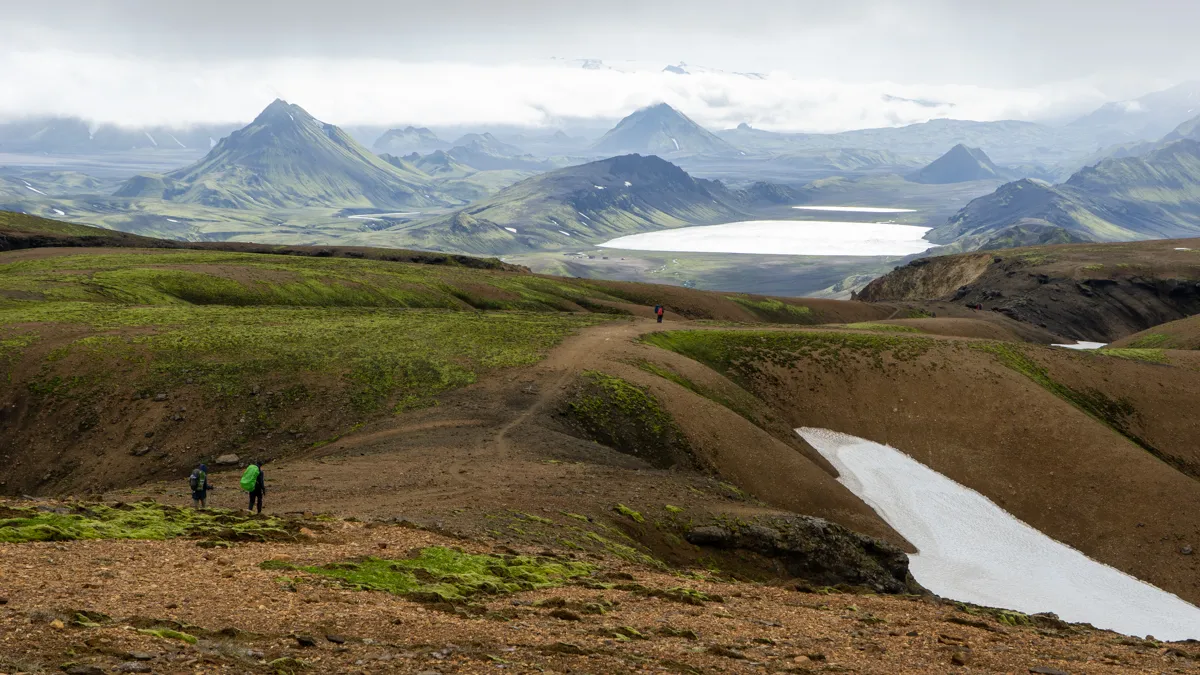
Snow one day, T-shirt weather the next? This Iceland summer packing list covers layers, gear and what to leave at home, tested on the Laugavegur Trail.
The weather in Iceland in summer: expect anything
I travel a lot, but Iceland was new to me. I spent just over a week there, hiking the Laugavegur Trail among other things, and luckily I had packed pretty well.
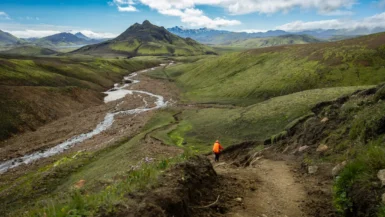
Summer in Iceland does whatever it likes. When we arrived it was misty and rainy, and when we left the sun was shining. During this trip I walked through snow, and on another day in just a T-shirt in a bright green landscape. Summer in Iceland doesn’t necessarily mean sunshine.
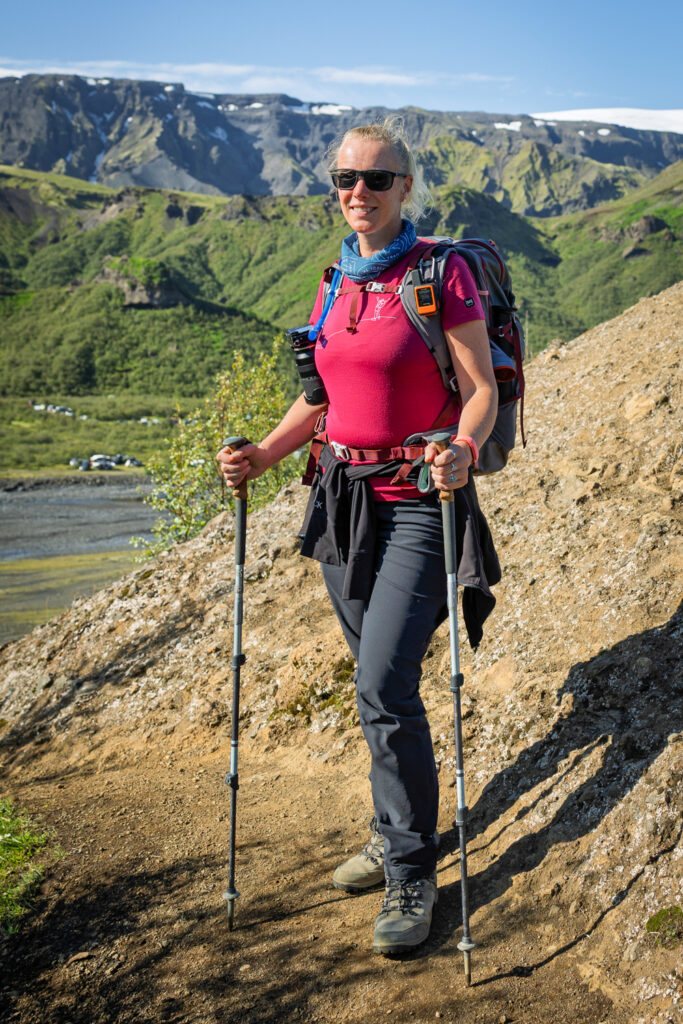
In this Iceland summer packing list you’ll read what I packed, what I would do differently next time and what you can happily leave at home. My trek was the starting point, but the list works just as well for a road trip with the occasional hike.
Iceland summer packing list: clothing
If there’s one thing Iceland taught me, it’s that you can’t do without layers. One moment I was walking through snow, the next in just a T-shirt. With a good base layer, a warm layer and a jacket that keeps out rain and wind, you can handle anything.
Shirts and mid layers
Merino wool shirts – I can’t live without my merino wool T-shirts from Supernatural. They’re super soft, dry quickly and don’t start to smell as fast. It’s handy to bring merino wool shirts with both long and short sleeves, so you can switch.
Light top or mid layer – I usually bring a light sports zip-up, which dries quickly and adds just that bit of extra warmth. For Iceland I also packed a thicker fleece, which was lovely in the evenings.
Trousers
Hiking trousers – I rarely hike in proper hiking trousers, but Fjällräven sent me the Bergtagen Stretch Trousers and I really wanted to test them. I wore them on every single hiking day. They fit like a glove, you can tighten them with the built-in belt and they dry in no time. There are zips on the sides that you can open when you get too warm, and the pockets are deep enough for even my huge phone (a Samsung S25 Ultra). Perfect for Iceland!
Leggings or light sports trousers – You don’t have to look super fashionable in Iceland. Most people wear practical clothing, because you spend a large part of the day outdoors. Besides my hiking trousers I brought sports leggings and flared trousers from Gymshark. Soft and comfortable.
Jackets and waterproof trousers
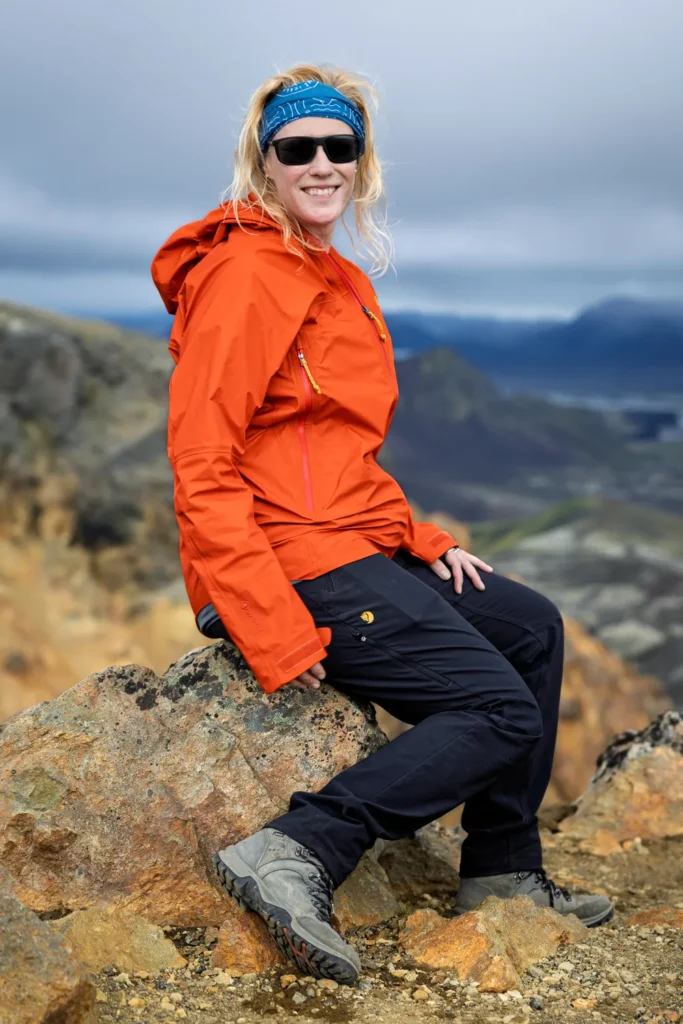
A good rain jacket – I own a whole pile of rain jackets, but none of them was good enough for Iceland. When it rains here, it doesn’t just drizzle. The tour operator recommended a rain jacket rated at least 15,000 mm. Fjällräven sent me the Bergtagen GTX Lite Jacket: super light and still waterproof. It has a hefty price tag, but in my opinion it’s worth it. It also worked really well against the strong wind, so it doubles as a windbreaker. This jacket will go on plenty more trips.
A lightweight down jacket (puffy) – In the mountains it can cool down a lot in the evening. Then it’s lovely to pull an extra warm layer over your clothes. My puffy from Mountain Hardwear has lasted for years, packs down tiny and adds a lot of warmth.
Waterproof trousers – I brought waterproof trousers from Decathlon and they’re really lovely. I didn’t end up using them, although there was one day I should have put them on. So I would still pack them.
Footwear
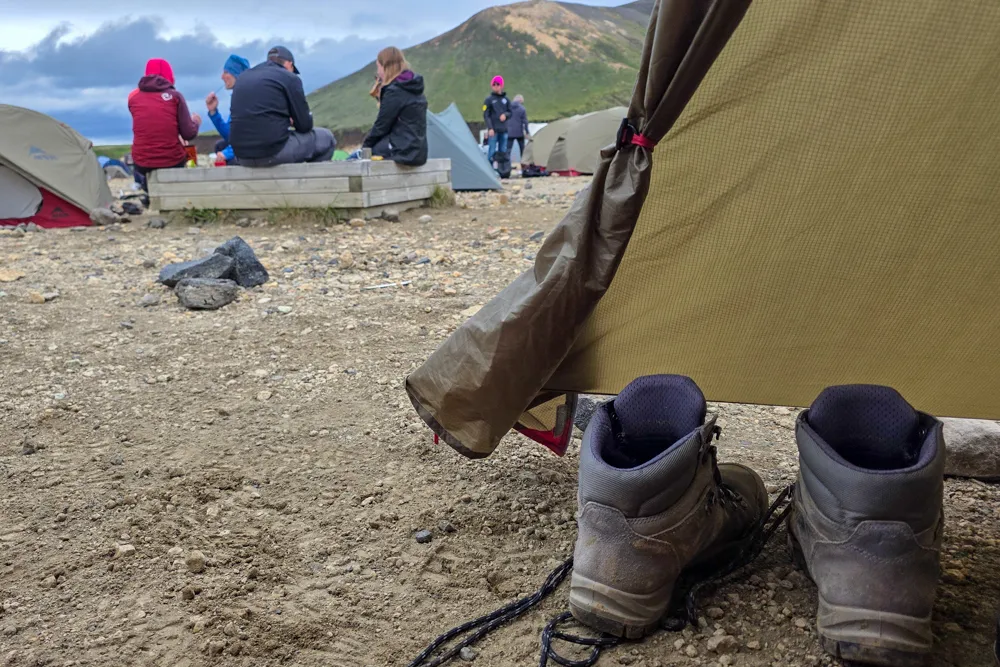
Anyone who knows me knows I prefer to walk in my Hoka Speedgoats, preferably a version that isn’t waterproof. They’re perfect for long walks in warmer, drier places, because if they get wet they dry super fast. In Iceland you need something sturdier, though, and waterproof (GTX) shoes are a must.
I took my high hiking boots from Ecco. They’re nowhere near as comfortable as my trusty Hokas, but my feet were dry and warm every day. The Hokas did come along for travelling and for Reykjavik, where it’s nice to have comfortable shoes for wandering around the city.
Socks, buff and other extras
I’m not listing underwear separately, because you’ll pack that anyway. Do bring practical sets that are comfortable and easy to wash.
Good hiking socks – Preferably merino wool. They smell less, last a long time and give you fewer blisters.
Buff (neck gaiter) – I loved having one around my neck all the time, because it kept me just a bit warmer. Sometimes I pulled it up to keep my ears warm (especially in a cold wind), and a few times I used it as a sleep mask, because it doesn’t get dark at night in summer.
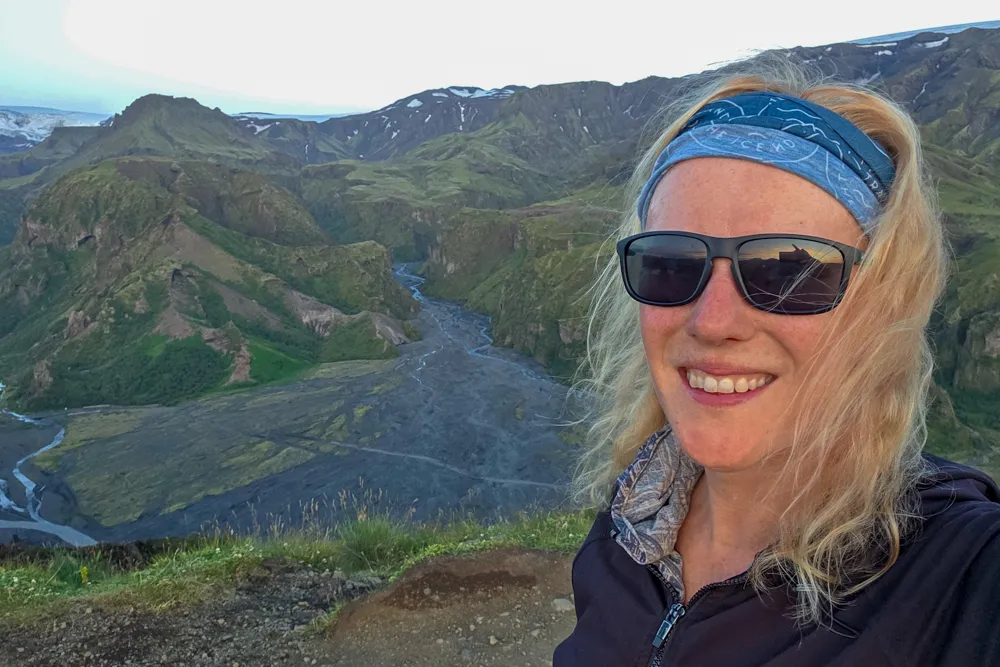
Hat and gloves – A hat was lovely now and then. I ended up not using my gloves, but a thin pair fits easily in your bag and is handy if it turns colder.
Swimwear – I brought a bikini and didn’t end up using it, but I would still recommend packing swimwear. You often pass special hot springs along the way, and it’s a shame if you can’t get in the water.
Electronics and practical items
Besides clothing, there are a few other things you’ll need.
Electronics
Chargers and a travel adapter – You take a lot of photos in Iceland, so your phone and camera run out of battery faster than you think. Iceland uses the same two-pin European sockets (types C and F, 230 V) as most of continental Europe. Travelling from the UK or the US? Then pack a travel adapter, and check the label on your chargers to make sure they can handle 230 V.
Power bank – Especially if you’re camping and hiking a lot, you don’t want to run out of power. A power bank really isn’t an unnecessary luxury.
Safety
First aid kit – Always a must. At the very least, bring plasters (including blister plasters) and paracetamol (acetaminophen in the US).
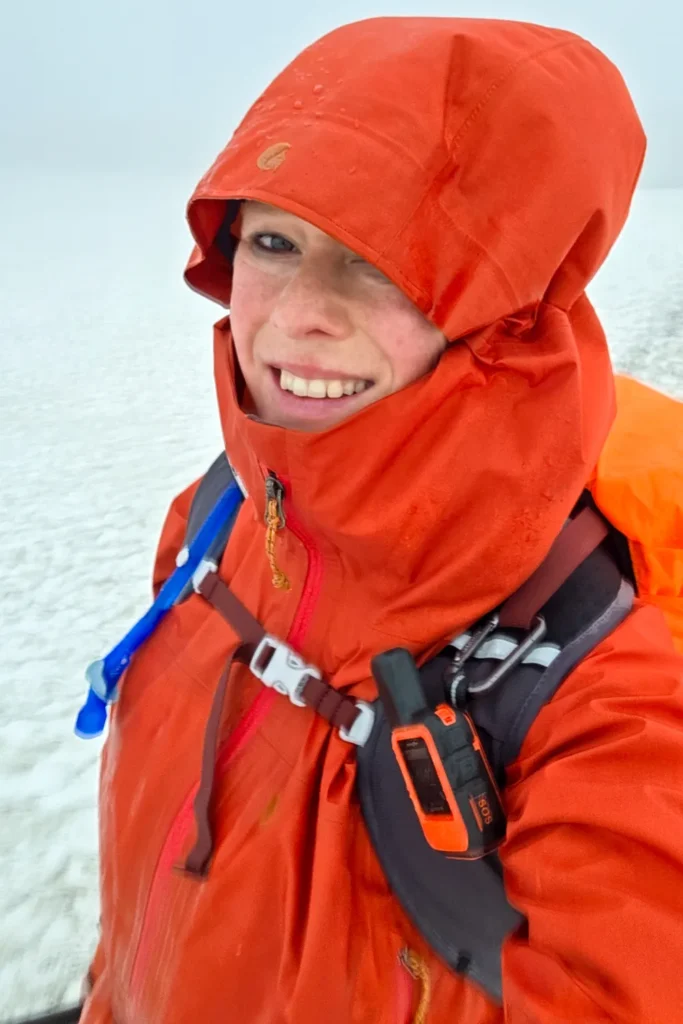
Satellite communicator – Not necessary for everyone, but I didn’t have reception everywhere on the Laugavegur Trail. That’s why I was glad my family could reach me, even in places where my phone did nothing. For this I had a Garmin inReach Mini 2. It also has an SOS button, in case something happens. Really reassuring when you’re crossing a huge snowfield! Please note: you need a subscription for this.
On the go
Water bladder or bottle – For the first time I was traveling with a Camelbak water bladder with me (3 litres, although I usually filled it with 2). It fitted perfectly in my backpack and I could always drink easily. For shorter hikes, a refillable water bottle is fine. The tap water in Iceland is lovely and perfectly drinkable, so you can easily refill anywhere.
Hiking poles – The landscape is sometimes quite rugged and there are steep descents. Then hiking poles are really great.
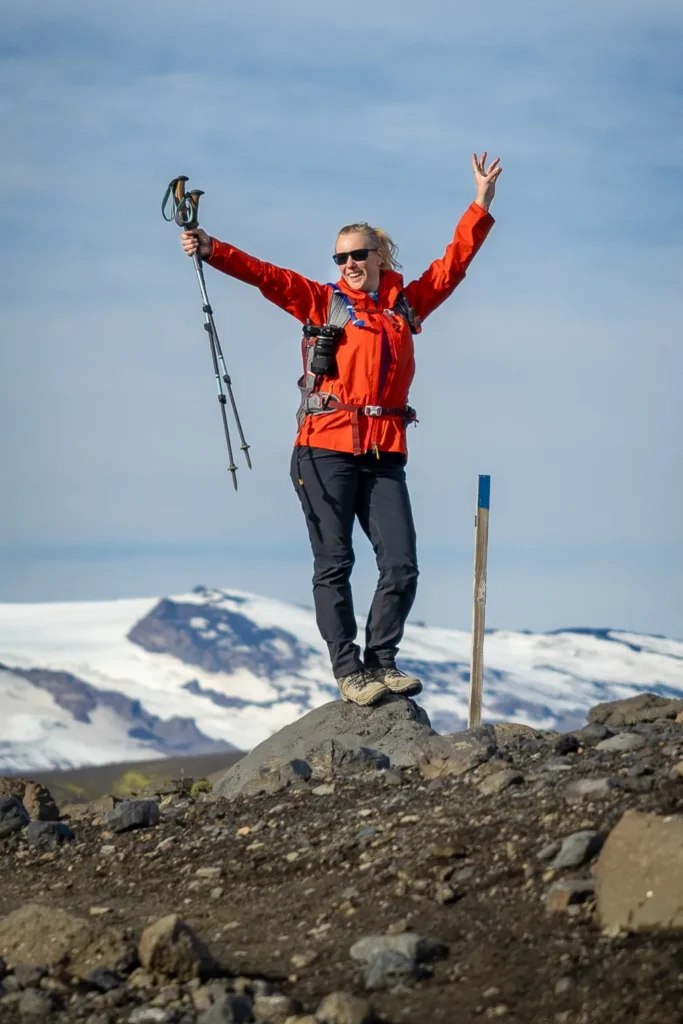
Sunglasses and sunscreen – Summer in Iceland doesn’t necessarily mean sunshine, but when the sun does shine, it really does. Pack them just in case.
Lightweight towel – A small, quick-drying towel is handy if you want to swim at a hot spring.
Rain cover and dry bags – Make sure your phone, clothes and electronics stay dry when it really pours.
Backpack or suitcase?
Whether you travel with a backpack or a suitcase is a personal choice and depends mostly on your trip. Are you planning a road trip, moving from hotel to hotel? Then a suitcase is often the most practical. For trips like that I bought a sturdy medium Samsonite suitcase. Not too big and not too small.
Travelling mainly by public transport and walking a lot? Then a backpack is the smart choice. My favourite is the Osprey Eja (Exos for men): lightweight, but it still sits comfortably. I took my Eja on this trip, mainly because I travelled to the airport by train.
Daypack for your hiking days
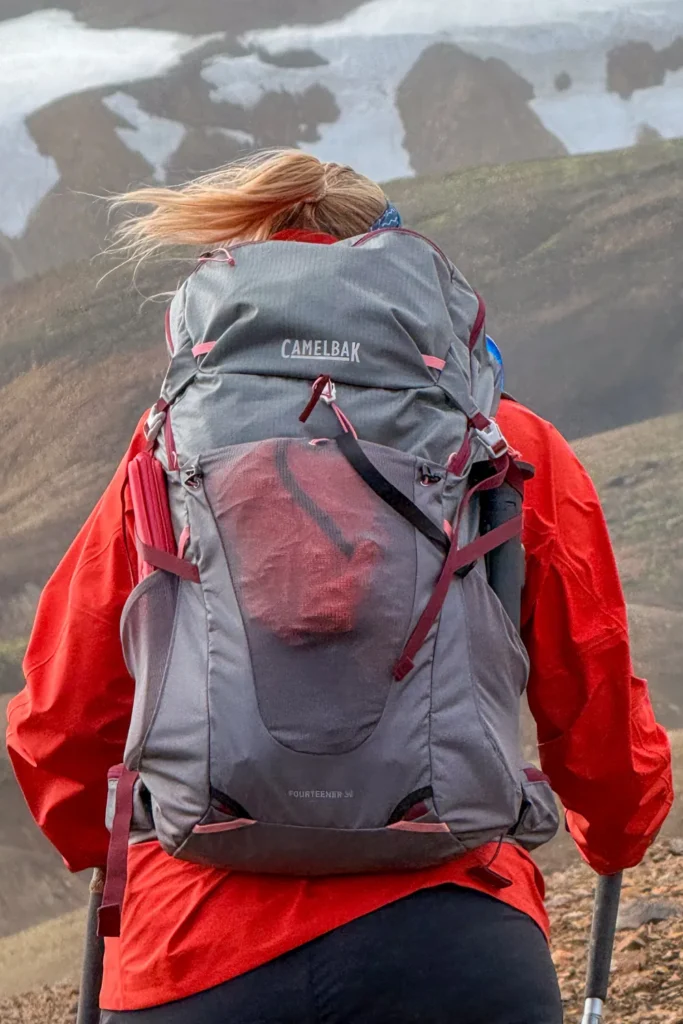
Besides your main luggage, you also need a backpack for your daily activities. I took a 30-litre Camelbak Fourteener (which I was given), and it was perfect for hiking days. Not too big, but big enough for food, drink and extra layers such as your waterproof trousers and jacket. The 3-litre water bladder fits in easily too.
Camping gear for multi-day hikes
Planning a multi-day hike in Iceland and still need some gear? I put together a list of my favourite camping gear on my Amazon storefront, so you can find it all in one place.
What I would do differently next time
I didn’t need everything I had with me, and I missed a few things too. Because I was camping a lot, I had packed a headlamp. But I had somehow forgotten that it doesn’t get dark at night in Iceland in summer! So it stayed at the bottom of my bag for the whole trip.
The thing I missed most was something I never expected: hand cream. Somehow (being outside every day and the dry air?) my hands dried out completely during my trip to Iceland. It hurt! Next time I’ll make absolutely sure I bring a good, moisturising hand cream. Essential, if you ask me!
Book your trip & read more about Iceland
So, now you know what to expect from a summer trip to Iceland and which items are essential! Curious about my trip? You can read my report of the Laugavegur Trail hike here.
Want to read more about a holiday in Iceland and which places you shouldn’t miss? These guidebooks are a great place to start. If you buy or book something through the links in this article, I receive a small commission and you support this website at the same time.
And if you still need to book your trip, these are handy websites to get you started.
- Flights: Several airlines fly directly to Iceland. Check Skyscanner for all options and tickets.
- Car hire: The most fun and flexible way to get around is by hire car. Compare prices and insurance options on Discover Cars.
- Accommodation: The widest choice of places to stay is on Booking.com.
- Tours & tickets: There are plenty of fun tours and activities in Iceland, such as boat trips or soaking in unique lagoons. Check Get Your Guide for more options.
Did you enjoy this article and want more travel tips and inspiration in your inbox? Sign up for my newsletter.

Leave a reply