

Rain doesn’t have to ruin your hike. With a few smart choices and a flexible mindset, hiking in the rain can actually be enjoyable.
Hiking in the rain: is that even fun?
For years, I was a fair-weather hiker. If it rained, I stayed inside. The idea of getting soaked on purpose? No thanks. Even when planning long-distance hikes, I’d pick dry regions on purpose: 715 kilometers of desert on the Pacific Crest Trail, another stretch of dry landscape on Arizona Trail. The more sunshine, the better.
But no matter how carefully you plan, if you hike long enough, you can’t avoid it: at some point, it’s going to pour. And I used to get so grumpy about it. Everything felt heavier, my mood sank with the temperature, and honestly, I wasn’t much fun to be around.

That’s changed. These days, I often hike in areas where rain isn’t rare, just part of the deal. I even walked the Camino Francés in March, despite people telling me it was a terrible month weather-wise. In the end, it wasn’t that bad.
Over the years, I’ve started to mind the rain less and less. Sometimes I even enjoy it. The world feels quieter and more peaceful. The forest smells richer. And that moment halfway through or at the end, when you change into dry clothes, take a hot shower, sip a coffee or eat something warm, feels so much better. You really get to enjoy it.
In this article, I’m sharing my best tips for hiking in the rain. I won’t promise you’ll stay completely dry. But I can help you make the weather feel less like a problem and more like part of the experience. Because there’s no such thing as bad weather. Only bad preparation. And let’s be honest, a bit of grumbling is allowed too.
Tips for hiking in the rain
If you expect rain during your hike, your preparation needs to be a little different than on a dry day. You don’t need to buy a full-on rain outfit, but a few smart choices can make all the difference. These are my go-to tips.
Clothing: layers and quick-drying over waterproof
Personally, I’m not a fan of fully waterproof pants or jackets. They stick to your skin, make you sweat, and sometimes even cause chafing. I prefer wearing layers. A quick-drying T-shirt, a thin fleece, and a breathable rain jacket work best for me.
Avoid cotton, as it stays wet and cold. Quick-drying synthetic fabrics or merino wool are much more comfortable in the rain and they dry faster too.
Shoes: waterproof or just not?
It’s a common debate among hikers: should you wear waterproof shoes or not? On long-distance hikes, I usually don’t. Once waterproof shoes get wet, they stay wet for a long time. And that’s not ideal when you’re walking 25 kilometers or more every day.
I wear Hoka Speedgoats, which aren’t waterproof, but they’re very breathable. They get wet quickly, yes, but by the next morning they’re usually dry again.

That said, I do understand why some people prefer waterproof shoes. For a short walk in the woods, especially when it’s muddy and slippery, I’ll wear them too.

Whatever you choose, always bring an extra pair of socks. Wet socks are a recipe for blisters, and that’s never fun. I usually wear merino wool socks. They dry quickly and rarely give me blisters.
Backpack: rain cover or drybags?
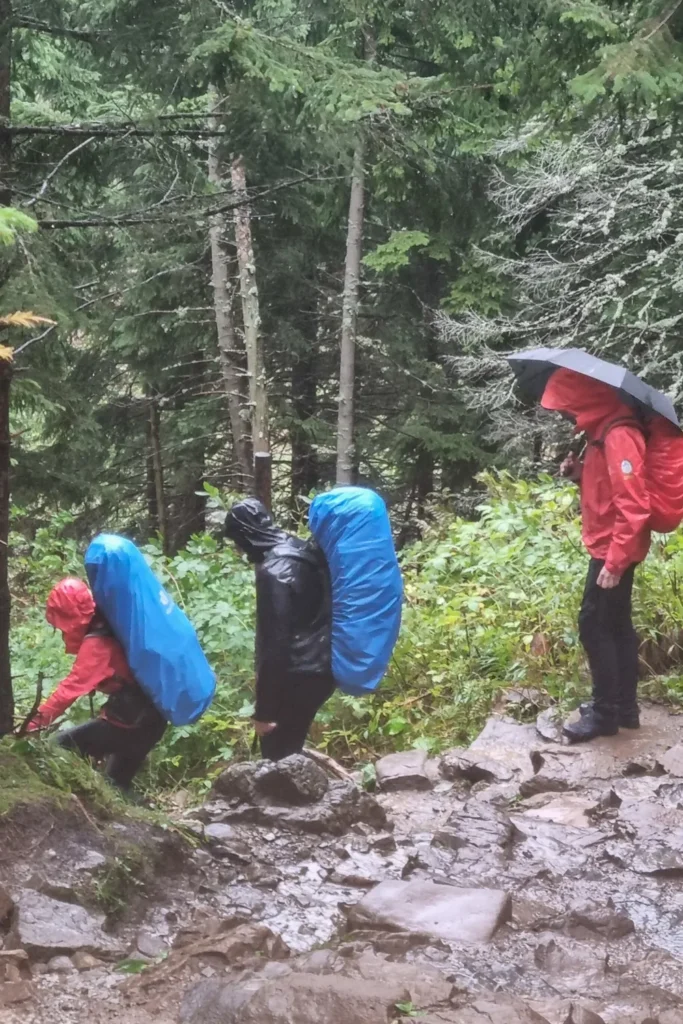
Naturally, you’ll want to keep your gear dry during a rainy hike. There are a few ways to do that. I sometimes just use a sturdy trash bag as a liner inside my backpack. It’s cheap, old school, but it works.
A rain cover is fine for light rain, but if it really starts pouring, water often still gets in through the back panel. That’s why I always put valuables like my passport, camera or power bank in a separate drybag. That way, at least the important stuff stays dry, even if the rest of my pack doesn’t.
Accessories: keep it simple
I usually just wear the hood of my rain jacket. If I put a cap underneath, it helps keep the rain out of my face. Hiking poles are especially useful in wet weather. They give you better grip on slippery trails and help you stay balanced on muddy descents.
I rarely use gloves myself, but they can be nice when it’s both cold and wet.

General tips
You now know what to wear and what to bring when hiking in the rain. Here are a few more general tips to make things a little more comfortable:
- Keep moving. As long as you’re walking, you’ll usually stay warm.
- Adjust your route. Forest trails are often surprisingly dry under the trees.
- Plan your breaks wisely. A café or a simple bus shelter can be enough to warm up or wait out a heavy shower.
- Think ahead. If you know it’s going to rain, choose a loop close to home or a route where you know there are places to take cover.

What to do after a rainy hike
Even if you’re glad (and maybe a little proud) that you went out anyway, after a rainy hike there’s usually only one thing you want: dry gear, warm socks, and something comforting. Here are a few tips to make things a little easier.
Dry gear means a better next hike
Wet weather doesn’t just leave your gear soaked. It usually brings dirt too. Mud on your shoes, leaves stuck to your rain jacket, damp clothes shoved into your pack. The sooner you clean and dry everything, the better. It helps prevent mold, bad smells, and that clammy feeling the next time you head out.
If you’re on a multi-day hike, it’s worth drying things out whenever you get the chance. I once hung my tent in a tree during a lunch break. It had rained all night and the thing was just a soggy pile of plastic. But then the sun came out, I found a good spot, and let it dry completely. That night I slept in a warm, dry tent. Pure joy.

So don’t throw wet clothes or gear into a pile. Hang them up instead – over a fence, a chair, your trekking poles, or whatever else is around. Even if it doesn’t dry right away, it makes a big difference in how things smell and feel.
Finish with a treat
After a wet hike, few things beat a hot shower or a warm foot bath. Then a cup of tea, coffee or hot chocolate, preferably in a cozy spot with dry socks on. Give yourself that moment. Your body has earned it.
There was one day on the Camino Francés where the trail stretched out in a long, straight line. 17 kilometers of dirt road, boring on its own, and it rained the entire time. After more than three and a half hours of plodding along, we finally reached a café. It was warm inside, we could hang up our wet gear, and they served coffee and tortilla. To be honest, it was the worst tortilla I had in Spain. But in that moment, it was exactly what we needed. And that made it perfect.
What if it’s snowing, foggy, or there’s a thunderstorm?
Rain is one thing, but sometimes you’ll run into other types of weather that require a bit of extra care. Here are a few quick tips for when you unexpectedly find yourself hiking in snow, fog, or thunderstorms.
Hiking in the snow
Snow makes everything quieter and softer. It can even feel a bit magical, but it also comes with some risks.
- Dress in layers. You’ll heat up quickly, but also cool down fast when you stop.
- Wear shoes with good tread, or use microspikes if the trail is slippery.
- Avoid unfamiliar terrain or deep snow if you don’t know the route.
- Bring extra food and water. You burn more energy than you think in the cold.

Hiking in thunderstorms
With thunderstorms, there’s really only one rule: try to avoid them. But if you do get caught in one, it helps to know what to do.
- Avoid open plains, hilltops and lone trees.
- Stay away from water and metal objects. Using trekking poles? Place them a few feet away.
- Never shelter under a small structure with a metal frame.
- Check a weather or lightning app before heading out to avoid surprises.
Hiking in fog
Fog can create a mysterious atmosphere, but it also makes it harder to navigate. You might even get just as wet as in a light rain.
- Choose a familiar or clearly marked trail.
- Use a GPS-based hiking app, like Komoot or AllTrails.
- Make regular noise so others – and wildlife – know you’re there.
- Wear reflective clothing or a light if you’re walking on or near roads.
- Slow your pace. Limited visibility makes it easier to misstep.

That’s it. My best tips for hiking in the rain (and other not-so-great weather). I hope they help you enjoy your next wet hike a little more. Any questions or stories of your own? I’d love to hear them in the comments.
More hiking tips
In the mood for more hiking and looking for inspiration? These are some great books filled with practical tips and beautiful trail photography:
100 Hikes of a Lifetime: The World’s Ultimate Scenic Trails
Lonely Planet Epic Hikes of the World
I hike a lot myself and usually take on one or more long-distance trails each year. That’s why you’ll find plenty of personal stories and hiking tips on this website. Have a look at:
- The best treks in the world: 18 incredible long-distance hiking trails
- Hiking alone as a woman: how to stay safe and feel confident on the trail
- 38 best books for hikers
Want more hiking tips, inspiration and personal updates? Sign up for my newsletter and don’t miss a thing.
Thanks for reading this far! As you might guess, running a website like this takes time and money. If you use one of the links in this article to book or buy something, I may earn a small commission. It won’t cost you anything extra, but it helps me keep this site up and running.
Read more about how to support this site here.


Leave a reply